Identity and Religious “Coming Outs”
Dubravka Lakić
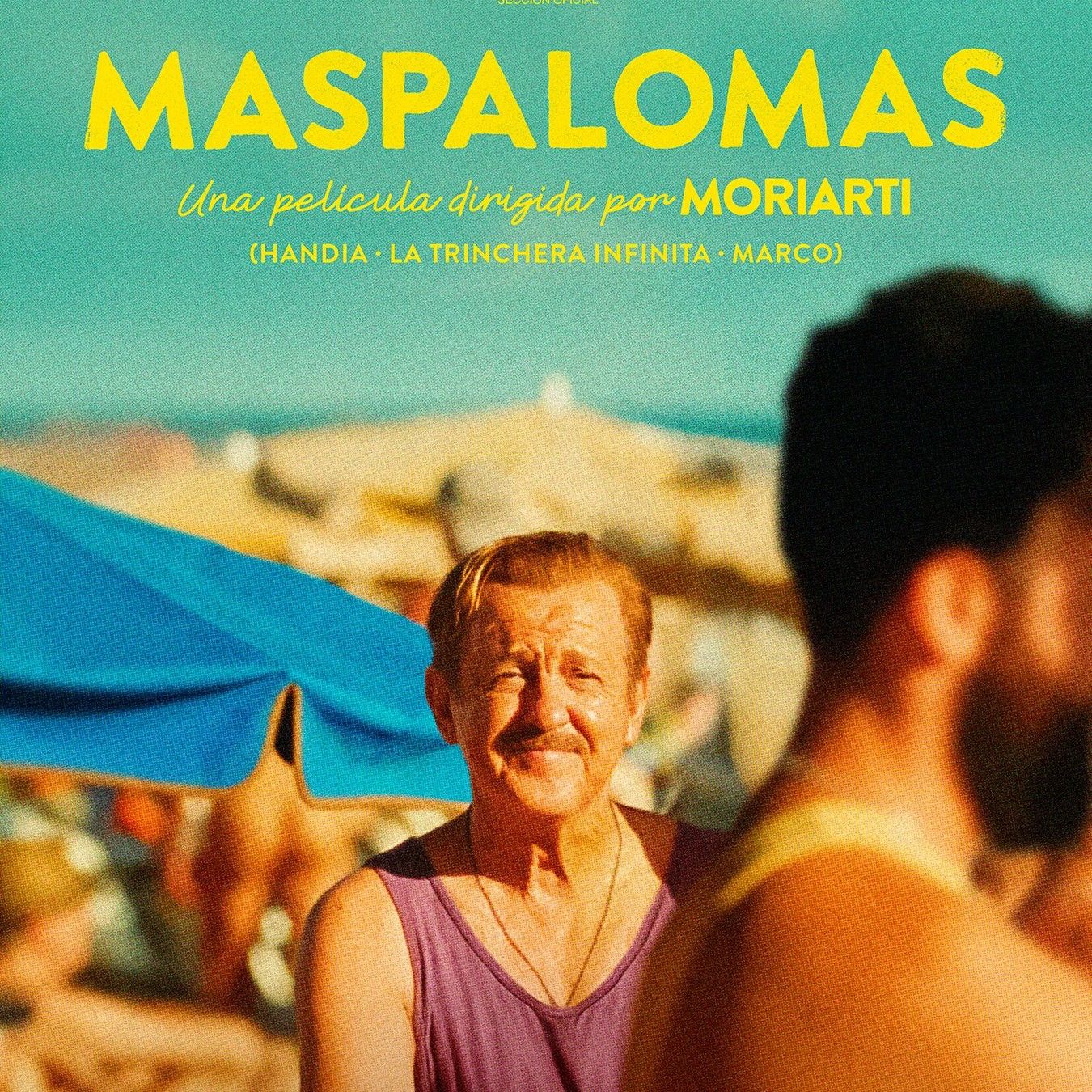
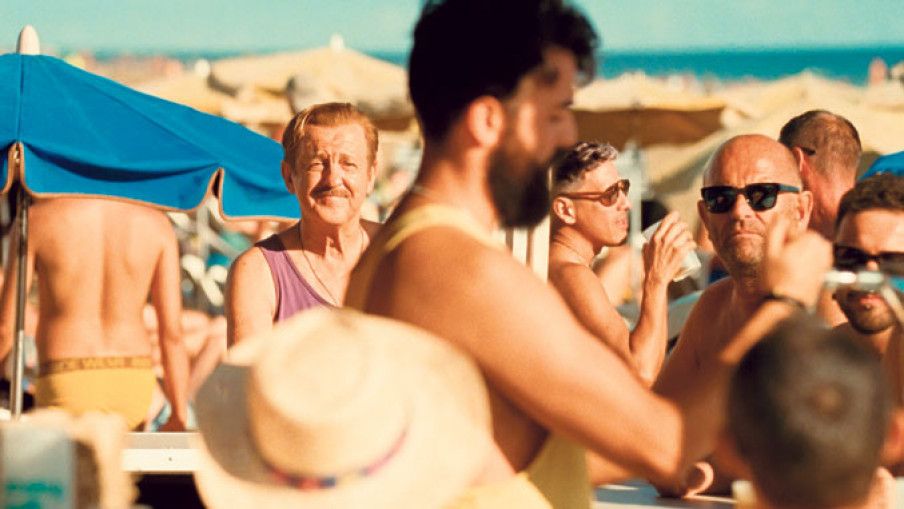
The shocking, extended opening scenes of naked male bodies — young and old — engaged in explicit sex made me rub my eyes and ask myself whether I was in a gay porn theater or at a screening of a Basque film competing for the “Golden Shell.” But then, as the film’s title — Maspalomas — appeared across the screen, a twist occurred: the film transformed into a profound emotional journey that left no one in the audience indifferent. It quickly became my favorite among all the films I had seen in the first days of the 73rd San Sebastián Festival.
Its award-winning writer-director duo, José Mari Goenaga and Aitor Arregi (Handia, The Endless Trench, Loreak), unexpectedly conquer with an intimate story exploring homosexuality in old age through the character of Vicente, a seventy-six-year-old man confronting his fears, dilemmas, past, and present. The title Maspalomas comes from the name of the iconic resort town on the southern part of the beautiful island of Gran Canaria, where the first part of the film unfolds. Vicente has spent 25 years there with his partner, from whom he has recently separated. This “naughty” old man, who once “came out of the closet” at the age of fifty — leaving behind his wife and daughter — keeps changing partners until he suffers a stroke, falls into a coma, and wakes up in his native San Sebastián, in a retirement home where his long-abandoned daughter has placed him.
Here, the viewer becomes entangled in Goenaga and Arregi’s finely woven exploration of universal themes — family, identity, and sexuality — approached with remarkable honesty, sensitivity, and depth. The directors balance this with generous doses of humor, much of it arising from the absurdities of life in a nursing home during the months leading up to the outbreak of the infamous coronavirus. And just when Vicente finds the courage to reconcile with himself and others — firmly deciding to finally tell everyone out loud that he is gay — reality, in a humorous yet painfully realistic twist, pushes him back into the “closet,” from which even in this modern “Pride” era it remains hard to emerge. Basque actor José Ramón Soroiz deserves a deep bow for his portrayal of Vicente.
Almost explicit sex scenes also appear in the French-American film Couture by Parisian director Alice Winocour — which wouldn’t be particularly noteworthy, nor especially important for the film, were it not for the fact that the scenes feature the naked performances of global star Angelina Jolie and her co-star, French actor-director Louis Garrel.
The two appear in Winocour’s story set amid the frenzy of Paris Fashion Week, where three women’s lives intersect as they wrestle with global tragedies and personal crises. One is Maxine (Angelina), an American film director in her forties who discovers she has breast cancer requiring immediate surgery (in real life, Jolie underwent a preventive double mastectomy due to genetic predisposition). The second is Ada, a young South Sudanese model fleeing a predestined fate in a deceptive universe, and the third is Angela, a French makeup artist working in the shadows of the catwalks, who dreams of escaping her life through writing a book.
Louis Garrel appears as both the fashion show and film director, whose project is initiated by his American colleague. The worlds of high fashion, cinema, and womanhood intermingle (albeit superficially) in Winocour’s film, colored by the issues shaping our contemporary reality — from the war in Ukraine to South Sudan’s tragedies and the conflict in Gaza. The film is quite watchable; Jolie remains beautiful and a skilled actress, but it is the young “black gazelle” Anier Anei, as Ada, who leaves the strongest impression.

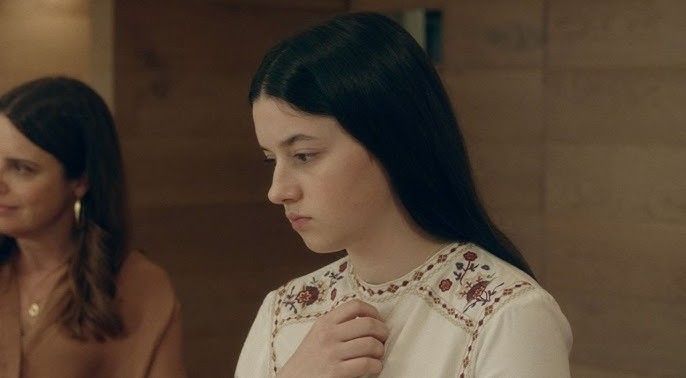
Another Basque film has won over both audiences and critics, thanks above all to its superbly written script and a finely chosen cast of memorable young and older local actors. This is Sundays, written and directed by Alauda Ruiz de Azúa — a story about Ainhara, an idealistic and brilliant seventeen-year-old faced with a choice: to attend university, as her family expects, or to dedicate herself to God and monastic life, an idea she has suddenly begun to contemplate intensely.
Ainhara’s wish to enter a convent shocks her family, creating a rift and putting everyone to the test. The director is intrigued by why someone so young would choose to become a cloistered nun — what could drive a person to withdraw from the world just as she is beginning to discover it? Some believe in God, others in their partners, and some in family as an unbreakable bond. The title Sundays refers to the Lord’s Day for Catholics — and, for many families, a day of mandatory gathering around the table.
This beautifully crafted story explores how difficult it is to detach from one’s family; even when absent, family ties cannot be replaced by anything else. Religion and spirituality are deeply present in the film: rituals, initiation processes, monastic routines, even the kind of intimate conversations a priest might have with a minor during spiritual guidance. What the characters don’t say to one another is as important as what they do, just as the persistent use of choral music is — according to the director — meant to lift the everyday into deeper dimensions, with a sense of poetry and vulnerability. Ruiz de Azúa paints all of this with humor, tenderness, and disarming sincerity.
Coincidence or not, Hollywood stars seem to have subscribed to rain this September during the world premieres of their new films. First, they “painted” the opening week of the Venice Festival with downpours — during which they appeared en masse — and now, in San Sebastián, a torrential rain ensured that Angelina Jolie could once again walk the wet red carpet in front of the Kursaal Palace before the premiere of Couture, competing for the “Golden Shell.”
Politika.rs, September 23, 2025
Pier Paolo Pasolini and the Renunciation of (the Trilogy of) Life
There is a certain discomfort we encounter when attempting a discursive or essayistic—bounded by predefined norms—illumination of the life and work of a great figure.
'In Every Theatre, People Would Leave"
How 'gay cowboy movie' "Brokeback Mountain" challenged Hollywood – and the US.
18 International Documentary Film Festival Beldocs
Beldocs will take place from May 21 to 27 at 10 locations across Belgrade. The festival will feature over eighty documentaries, ten world premieres, and a strong focus on domestic filmmakers.