Hey Gender, Let's Talk Sex
Igor Berecki
No matter what medal she wins, Algerian boxer Imane Khelif will most be remembered from this Olympics for sparking a fierce debate about transgender people in sports due to her "masculine" appearance, even though there is no evidence that she is male or has male chromosomes or excessively high testosterone levels. After everything, she will return home adorned with the much-desired Olympic medal and the completely undesired title of an icon for transgender people worldwide.
As usual, many commentators have their own opinions on the matter and feel an irresistible need to share them with everyone who cares, especially those who don't. However, in this cacophony of "expert" voices, a more attentive and neutral observer will notice a symptomatic detail: almost exclusively, laypeople are the ones commenting on Imane Khelif’s gender and sex, while it is very hard to find any measured comments from geneticists, doctors, or experts in gender and sexual identity issues.
The reason for this is simple: any somewhat serious expert and scientist will avoid forming an opinion based on incomplete or insufficient facts and information. And that's precisely the point: the information and facts about the Algerian boxer remain scarce and insufficient to form any reasonable opinion. After all, what more can be said that hasn't already been endlessly chewed over in all the media and on every social network?
Peepees and Weewees
I know I’m going to sound like a nostalgic old man (which I indeed am), but things truly were much simpler and more understandable for everyone back in the day. Let's start with something that seems very obvious: it used to be very easy to know someone's sex. And that, brother, was clear to everyone from the moment of birth until the end of life. You know, you are born from your mom’s thing (or, to avoid such vulgarity, you are delivered by a stork or found in a cabbage patch), and at first glance, everything is clear: if there’s a peepee between your legs, you’re a boy (a son, of course…), and if nothing dangles but there’s a weewee, then you’re a girl (or, to be blunt, a child). And that was it. No further explanation needed. Dolls, pink, long hair, and dresses were reserved for girls ('female gender'), while balls and slingshots, blue, pants, and short haircuts were for boys ('male gender'). Boys don’t cry, they understand tools and cars, while girls learn to cook and put on makeup to be pretty.
What’s more, in school, biology lessons confirmed that boys' peepees and girls' weewees (and breasts, once they grow) are anatomical structures clearly defined by and predetermined by our sex chromosomes: those with XX chromosomes are female, and those with XY are male. Moreover, hanging under the peepee are male testicles filled with sperm, while ovaries holding eggs are hidden in the belly above the weewee. And those nerds who read the small print in the textbooks for those who wanted to know more bragged about their knowledge that males have the hormone testosterone (hence the mustaches and body hair, deep voices, and big muscles), while females have estrogen (which gives them curves, smooth skin, menstruation, and softer voices and muscles).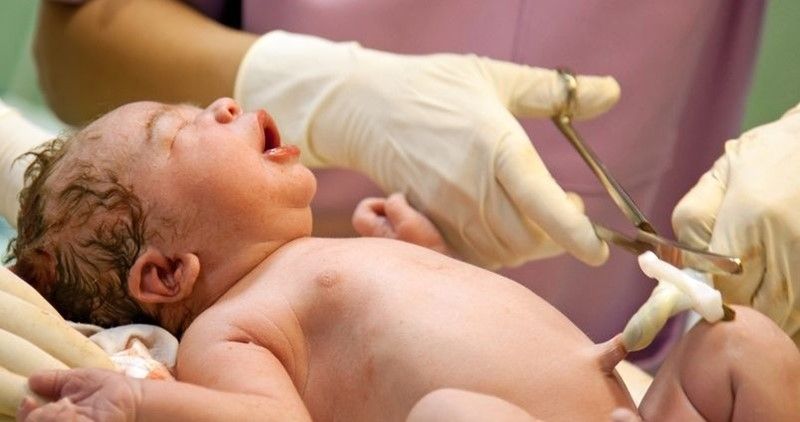 At birth, the most important thing is to be careful about what to cut: ideally, only the umbilical cord.
Ah, how wonderful and simple those times were!
But, as with everything in biology and life in general, as time passed, and we – both as individuals and as a society – grew more experienced, older, and exposed to life’s harsh realities, it became clear that things are not so simplistically straightforward.
To begin with, we have learned the inevitable and cruel fact that the concepts of "sex" and "gender" are not synonymous. Sex is traditionally (read: conservatively) considered a "natural" biological binary system that includes only two mutually exclusive options: male or female. It has always been this way: when a baby is born, doctors or midwives take a look "down there" and depending on what they see, they declare the child a "boy" or a "girl." Indeed, defining sex is traditionally based on a set of biological factors that include chromosomes (XX or XY), hormones (estrogen and testosterone), internal and external reproductive organs, and secondary sexual characteristics (like mustaches, beards, or breasts).
But "those things" aren't always that simple
Although we are used to assuming a binary system for defining sex in everyday situations, nature sometimes pulls out spectacular surprises from its sleeve. There are numerous situations and exceptions known as intersex conditions, where the development and definition of sex do not follow the usual binary system M/F – XY/XX – testosterone/estrogen – peepee/weewee. Moreover, when we say "numerous situations and exceptions," we truly mean it because, believe it or not, among us exists the same percentage of intersex individuals as there are, for example, red-haired people: about 1% of the total world population (no, this doesn’t mean redheads are intersex, I'm just using them as a colorful comparison to illustrate statistical frequency in the general population).
Let's first take a look at what lies in the underpants of the majority 99% of people! Let’s start chronologically, from that first, initial, fertilized cell all the way to birth – or better yet, growing up – of a boy or girl.
If you ever thought that from that tiny cell created by the fusion of dad’s sperm and mom’s egg all the answers to whether the future child will wear a pink dress or blue pants are already there – you were wrong. From the fertilized egg to the definition of a newborn’s sex is a fascinating and complex journey that begins with the fusion of two cells - the egg and sperm. This moment, known as fertilization, marks the creation of the zygote, the first cell of a new human being.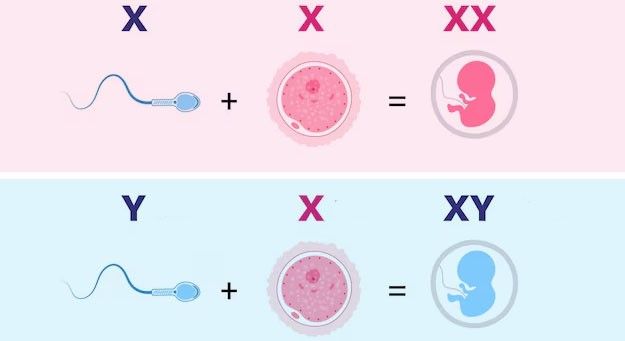 Could it be simpler? What could be unclear here? And yet... it can be.
Since the egg always carries the X chromosome, and the sperm can carry either an X or Y chromosome, if the sperm that fertilizes the egg carries an X chromosome, the zygote will have an XX combination, which genetically determines the female sex. The other option is that the sperm carries a Y chromosome, resulting in an XY combination, genetically determining the male sex. In short, at the moment of fertilization, what we call the genetic sex of the child is determined.
However, although the genetic sex of the zygote is clearly defined, at this stage of the future human being's development, there are no visible differences between male and female embryos: all zygotes – both male and female – look and behave exactly the same: half an hour after fertilization, they begin to divide, creating more and more cells, still looking identical, regardless of their genetic sex.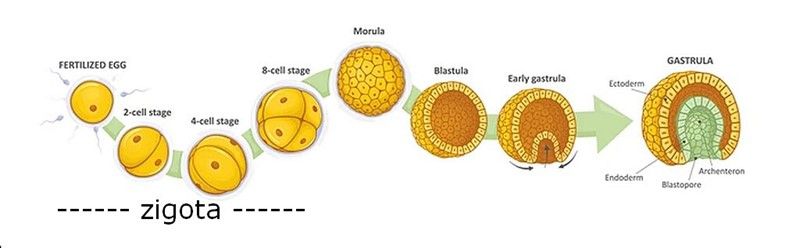
Early Embryonic Development: Laying the Foundations
During the first few weeks after fertilization, the embryo (the term for an early stage of development) undergoes rapid and dramatic changes. Cells continuously divide and begin to organize into different layers and structures. Around the fourth week after fertilization, a cluster of cells known as the “genital ridge” forms within the embryo, which is a crucial step in the development of the reproductive system (sexual organs), as from this structure, during further embryonic development, structures such as the Wolffian and Müllerian ducts (remember them, we'll see them playing important roles later!) will form, as well as the most important – the gonads: testes and ovaries.
Even at this stage, the genital ridge still looks identical in all embryos, regardless of their genetic sex. It contains the aforementioned ducts and primitive germ cells that have the potential to become either ovaries or testes. These cells are thus “multi-purpose” (pluripotent, as scholars would say).
Around the sixth week of embryonic development, a second key moment in sex development occurs: in embryos with XY chromosomes (genetically male), a gene known as SRY (Sex-determining Region Y) is activated. The SRY gene is located on the Y chromosome and acts as a “switch” that triggers the development of the male pathway. The activated SRY gene initiates a complex cascade of genetic and hormonal events that begin with the production of a protein called TDF (testis-determining factor), which then activates other genes crucial for the development of the testes, the male gonads.
In embryos with XX chromosomes, genetically female, the SRY gene is absent (because there is no Y chromosome in the XX combination), so the "male" pathway of development is not activated. Instead, in the absence of the SRY gene and TDF protein, the genital ridge spontaneously develops into ovaries, the female gonads.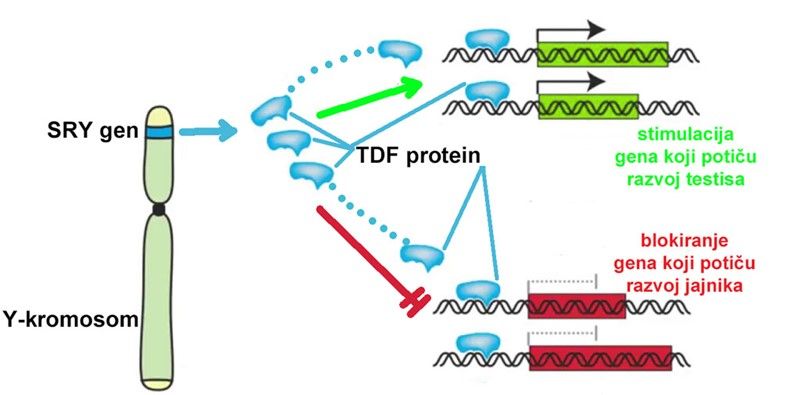
Thus, both testes and ovaries originate from the same tissue base (the genital ridge), and the only factor that differentiates them is whether the SRY gene performed its function during the 6th week of development or not. Even within this fact, more perceptive and curious readers will find the basis for asking one of the critical questions: "What if the SRY gene does NOT perform its function in an XY embryo for some reason?" An interesting answer to this will be provided in the following text.
Development of the Gonads: Ovaries or Testes?
The next few weeks after the (non-)activation of the SRY-TDF axis are crucial for the differentiation of the gonads. In "male" XY embryos, the primitive germ cells in the genital ridge, under the influence of the SRY gene and TDF, begin to organize into structures that will become testes: seminiferous tubules form, and specialized cells – Sertoli cells – will produce sperm, while Leydig cells will produce androgens, the “male” sex hormone, testosterone.
Pay attention to the fact that testosterone does not precede the formation of male sexual organs, but rather the opposite – the testes are first defined by the activation of SRY/TDF, and only then do they begin to produce androgens (male hormones), among which testosterone is the most important. This fact will prompt the more curious readers to ask another crucial question: "What if testosterone, for some reason, fails to do its job in an XY embryo?" We'll discuss this further later.
As we already mentioned, in XX embryos, without the influence of the SRY gene, primitive germ cells organize into structures that will become ovaries: follicles form, structures that contain immature “female” egg cells. The production of “female” hormones – estrogen and progesterone – in the ovaries will begin later and will be significantly less active compared to testosterone production in the male gonads.
Hormonal Storm: Testosterone Takes the Lead
Two weeks later, around the eighth week of pregnancy, in XY embryos, the newly formed testes will begin producing significant amounts of testosterone, the hormone that plays a central role in the further development of the male reproductive system; this marks the beginning of the so-called testosterone storm. Testosterone stimulates the development of the Wolffian ducts (remember, these are the primitive structures present in embryos of both sexes). Under the influence of testosterone, these ducts will develop into internal male reproductive organs: the vas deferens and epididymis.
Simultaneously, the testes of XY embryos begin producing a hormone known as anti-Müllerian hormone (AMH), which – as its name suggests – causes the degeneration of the Müllerian ducts (those other primitive structures present in all embryos), which would otherwise develop into female reproductive organs.
In XX embryos, in the absence of testosterone and AMH, the opposite process occurs: the Wolffian ducts degenerate, while the Müllerian ducts develop into female reproductive organs: the fallopian tubes, uterus, and upper part of the vagina.
Development of External Genitalia
The development of external genitalia begins a week after the testosterone storm (or its absence), around the 9th week of pregnancy. Interestingly, all embryos start this process with the same initial set of tissues from which either male or female genitalia will develop. This initial base includes the genital tubercle, genital folds, and genital swellings.
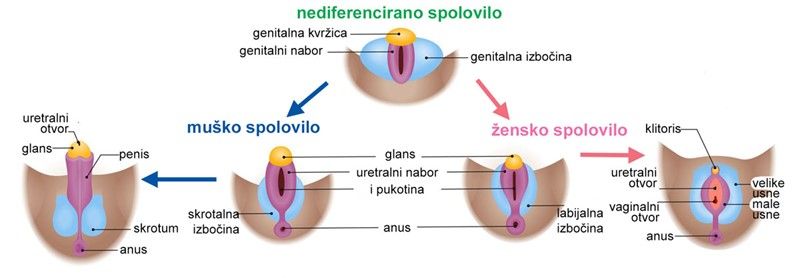 Differentiation of male and female external genitalia: from bumps, protrusions, and folds to the penis and testicles, vagina, and clitoris.
In XY embryos, testosterone is converted into a more potent hormone called dihydrotestosterone (DHT) around the 9th week. Under the influence of DHT, the genital tubercle elongates and becomes the penis, the genital folds fuse to form the urethra within the penis, and the genital swellings enlarge and fuse to form the scrotum.
In contrast, in XX embryos, without the presence of “supercharged testosterone” (DHT), the genital tubercle remains small and becomes the clitoris, the genital folds remain separate and form the labia minora, and the genital swellings become the labia majora.
This process is an excellent example of how the same initial "building material" can, under the influence of different hormones (or in the absence of that influence), result in very different structures. And in this fact, more lucid and curious readers will, for the third time, find the foundation for posing a few more crucial questions: "But what if, for some reason, dihydrotestosterone doesn't complete its 'male' task in the XY embryo? Or, say, what if in the XX embryo, for some reason, 'male' DHT is activated and affects the external female genitalia?" We will touch on this later, provided you still have the patience and focus to follow this dizzying journey through genes, chromosomes, genitalia, and hormones.
The second piece of the puzzle: fine-tuning
During the rest of the pregnancy, the sexual organs continue to grow and develop. In male fetuses, the testes descend from the abdominal cavity into the scrotum, usually during the last two months of pregnancy. In female fetuses, the ovaries are formed by the 20th week of pregnancy, and each ovary contains about six million immature egg cells, although most will perish before puberty. It’s important to note that external genitalia are essentially defined and formed by mid-pregnancy but continue to grow and develop until puberty, as the hormonal "dance" continues after birth: hormonal activity persists and plays a key role in further development and definition of the anatomical markers of male and female sex.
In male fetuses, the testes continue to produce testosterone, which is crucial for the further development and growth of the penis and other male reproductive organs. Interestingly, testosterone levels in male fetuses peak around the 16th week of pregnancy, reaching levels comparable to those found in adult men! In female fetuses, the ovaries begin producing estrogen and progesterone, but in relatively small amounts, which are nonetheless sufficient for these hormones (in the absence of testosterone!) to play a key role in the development of the uterus and vagina.
The brain has a gender
Although most of our story so far has focused on the development of physical sex characteristics (testes and ovaries, penises and vaginas), it's a fascinating and unavoidable fact that the brain also develops in a sex-specific way. Research has shown that during embryonic and fetal development, hormones (particularly testosterone) directly influence the development of certain brain areas: in male fetuses, exposure to testosterone during critical periods of brain development can affect the structure and function of cognitive brain regions, which may be significant in forming some gender-based differences in behavior and cognitive abilities observed later in life.
It’s important to note that this area of the influence of sex hormones on neural development is still the subject of intense research, and many of these differences are subtle and subject to significant overlap between genders, as well as to variations influenced by cultural and educational factors.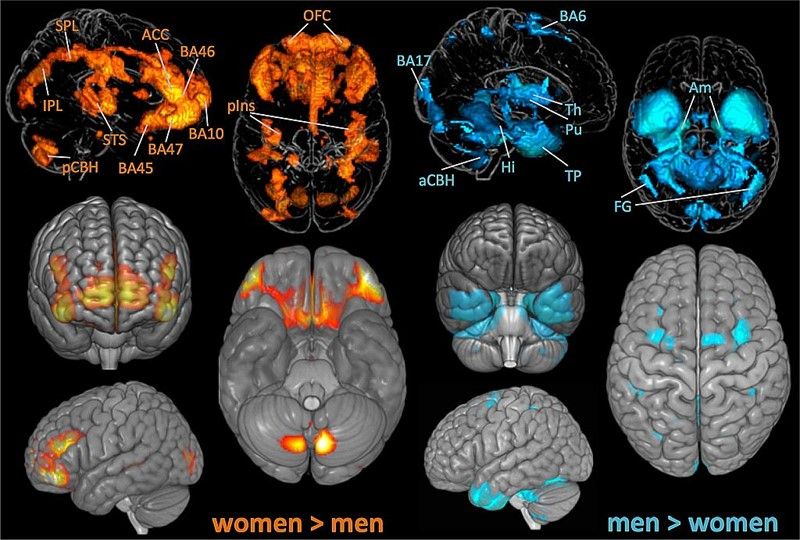
Deviations from the binary system of sexuality: diversity and variations
Let’s now satisfy the curiosity of the inquisitive among you by taking yet another exciting journey through human biology and physiology, answering questions about what happens when something goes wrong during the complex process of sex and genitalia formation—whether in chromosomes, gene activation, hormonal action, or the development of sexual organs.
1. When the Numbers Don’t Add Up: Chromosomal Variations
We began the story of sexual development with chromosomes. People usually have 46 chromosomes, including two sex chromosomes: X and X for women, or X and Y for men. But, as we've already mentioned, nature sometimes has other plans.
a) Turner Syndrome (XO): Life with Just One X Chromosome
Imagine being born as a 46-piece puzzle with one piece missing: this is roughly what happens in Turner Syndrome. People with this condition have only one X chromosome instead of the usual two, which is genetically designated as XO. The result of this deficiency is that girls born with this syndrome are usually short in stature and may have some specific physical features such as a broad neck with skin folds. What is more important in terms of defining sex is that their ovaries do not develop normally, which often leads to infertility. Interestingly, despite the absence of the second X chromosome, these individuals typically have normal-looking and functional female reproductive organs. This also proves that the development of the female sex does not require an “active” signal like the SRY gene for the male sex: if there are no hormonal interventions, the development of sex towards female characteristics occurs spontaneously, by itself, and represents a kind of "default pattern."
**
b) Klinefelter Syndrome: When the X Gets Reinforced**
On the other side of the spectrum, we find Klinefelter Syndrome, where individuals, instead of the "male" XY pair of chromosomes, have a third, additional chromosome: another X chromosome, resulting in an XXY karyotype. These individuals are genetically and physically male, but their extra X chromosome causes some unique characteristics: boys and adult men with Klinefelter Syndrome are usually taller than average, and they regularly have less pronounced male secondary sexual characteristics (such as less body hair, a softer voice) and often face fertility issues. Why? The extra X chromosome interferes with the normal function of the testes, resulting in reduced testosterone production. And the less testosterone there is, the more spontaneous sexual development tends to lean towards femininity, as we saw in the case of Turner Syndrome.
2. When the switch malfunctions: Problems with the SRY gene
Do you remember the SRY gene, that “magical switch” that initiates male sexual development in the 6th week of embryonic development? Like any switch, this one can fail too, leading to situations where standard XX and XY combinations do not necessarily result in the expected female (XX) or male (XY) sexual characteristics. In cases of individuals with problems related to the SRY gene, we might encounter physically unambiguous women who, however, have an XY (male) chromosome combination or perfectly healthy men who are, genetically speaking, XX women.
Syndrome of the XY Woman: When “Y” doesn’t mean “male”
An XY woman is a person who genetically has a “purely male situation,” possessing XY chromosomes, but with a mutation in the SRY gene that makes it nonfunctional. The result? A person with XY chromosomes (thus, male) who is born physically “without a penis,” and subsequently develops and grows as a woman with all the visible female physical, sexual, and developmental characteristics. This condition is known as the “XY female syndrome” or “Swyer syndrome.” Individuals with this condition have female external genitalia, identify as women (and are raised as women), and only through chromosomal analysis is it revealed that they are genetically male. However, due to the chromosomally male XY combination, they do not have functional ovaries but instead have undeveloped gonads, known as “streak gonads,” which do not produce eggs or hormones. As a result, these individuals usually do not undergo puberty without hormone replacement therapy.
Syndrome of the XX Male: When one “X” gets a “Y” addition
Sometimes, during the formation of sperm in the testes, the tip of the Y chromosome containing the SRY gene “breaks off” and can “attach” to the X chromosome. If such sperm, carrying an X chromosome “enhanced” with the SRY gene, fertilizes an egg, the result is a person with two X chromosomes (thus genetically an XX woman) but with a functional SRY gene. These women develop as men, despite not having the entire Y chromosome but only a small fragment! Individuals with this condition have normal and functional male external genitalia and the physical appearance of a man. They are raised as boys from birth because the SRY gene and TDF protein drive the production of male levels of testosterone and dihydrotestosterone and, during embryonic development, push the genital ridge cells towards the development of male sexual characteristics and organs. However, they are usually infertile because they lack other genes from the Y chromosome necessary for sperm production.
3. Hormonal Anarchy: When the body doesn't follow directives and instructions
Even if the chromosomes and genes are functioning correctly, problems can still arise if the body’s cells do not respond properly to sex hormones. There are several such situations, and we will list just two of the most common cases of “miscommunication” between hormones and body cells.
The first is Androgen Insensitivity Syndrome (AIS), a condition where testosterone and other compounds from the group of “male hormones” (androgens) do not affect the target cells. Imagine persistently sending messages to someone, but the recipient doesn’t have the correct hardware or software to read them: this is roughly what happens in androgen insensitivity syndrome. Individuals with this condition have XY chromosomes and produce testosterone and other androgens, but their cells cannot respond to these hormones.
 Hanne Gaby Odiele, a well-known Belgian model, was born with androgen insensitivity syndrome (AIS), which results in her having a female outward appearance—and gender identity—despite possessing the "male" XY chromosome configuration.
The result? Individuals with complete androgen insensitivity (CAIS) develop as women, with female external genitalia despite having XY chromosomes and testes (which are usually located in the abdominal cavity). The reason for this is, as we have already mentioned, that if there are no hormonal interventions (and there aren't because the cells do not respond to testosterone), the development of sex characteristics spontaneously follows the “default pattern” towards female traits. These individuals often discover their condition only at puberty when they fail to menstruate.
The second case is Congenital Adrenal Hyperplasia (CAH), a condition that affects the adrenal glands, one of the body’s most active hormone-producing organs, causing the overproduction of androgens (male hormones). This can significantly affect sexual development, particularly in XX individuals. Girls with more severe forms of CAH can be born with external genitalia that appear more masculine than feminine due to a process called virilization, caused by the excessive action of androgenic hormones. However, despite often being identified as boys at birth (because they have a penis, after all...), they still have internal female reproductive organs (a uterus and ovaries).
On the other hand, boys with CAH—due to the strong stimulation of elevated androgen (male) hormones—can enter puberty very early, sometimes as young as 2 or 3 years old.
**
4. Ambiguous Genitalia and Other Variations**
Sometimes, the problem is neither in the chromosomes nor the hormones, but in the development of the sexual organs themselves.
An example is mixed gonadal dysgenesis, a condition where a person has a testis on one side and an underdeveloped sex gland (often called a "streak gonad") on the other. These individuals usually have a mosaic karyotype, meaning that some cells in their body have XY chromosomes, while others only have an X chromosome (part of their body has normal male genetics, and another part has the chromosomal pattern of Turner syndrome, XO). The result of this confusion can vary: some individuals have predominantly male characteristics, some predominantly female, and some have a mixture of male and female features.
Another example is ovotesticular disorder of sexual development (DSD), formerly known as "true hermaphroditism" or "true intersex," a rare condition where a person has both ovarian (female) and testicular (male) glandular tissue. The external genitalia of individuals with this condition can range from typically female to typically male or be "somewhere in between."
These examples show that sexual biology is not always black and white (or rather, not always blue-pink). Sex represents more of a spectrum than a strict binary category.
Gender: When Society Gets Involved
If you think sex is a complicated concept after all this, wait until you hear what we have to say about gender! Gender is a social construct, a term that describes the roles, behaviors, and identities that society, culture, and tradition assign to different sexes. Imagine that sex is the hardware of your computer, and gender is the software: your hardware and your colleague’s hardware may be exactly the same, but depending on the software installed in it (in the hardware, not the colleague!), your two computers might perform completely different tasks.
Gender roles vary from culture to culture and change over time. For example, in ancient Egypt, men wore makeup and wigs, and in 18th-century Europe, high heels were exclusively male fashion. Traditional Scots and Welsh men wear skirts (without underwear!), and in numerous cultures, women wear pants — shalwar, churidar, hanbok, qipao (with or without underwear).
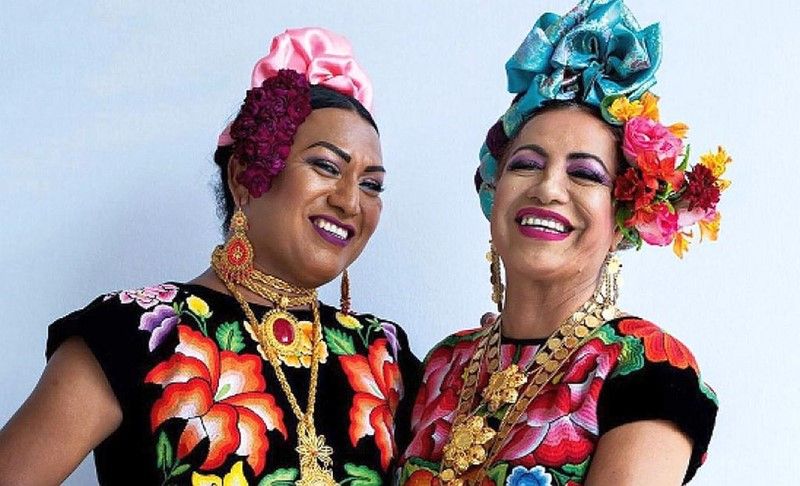 Muxe, traditional "third sex" in Mexico
In some cultures, there are traditionally recognized "third genders," such as the hijra in India, the muxe in Mexico, the mahu in Tahiti, or the fa'afafine in Samoa—individuals who do not define themselves as either men or women. In those cultures, they are not only accepted but are respected and valued members of the community. Up until a few decades ago, it was possible to see virgins in a few Balkan countries—women who took on a male identity, behavior, and social responsibilities, practically becoming men in the eyes of the community. They wore male clothes and weapons, took on male jobs and societal roles, and had the same rights as men, including property ownership, while sacrificing female roles like marriage and motherhood.
Clearly, what we consider "male" or "female" behavior is neither globally universal nor unchanging.
Gender Identity: Who Am I?
Gender identity is, in short, a person’s internal sense of which gender they belong to. For most people, gender identity aligns with their biological sex, but for some, this is not the case. People whose gender identity differs from the sex assigned to them at birth are called transgender. Some identify as men, some as women, and some as "something in between" or entirely outside these categories.
We have already mentioned how genes and hormones strongly influence not only the development of physical sexual characteristics during early embryonic development but also significant parts of our brain, particularly those related to cognition, perception, emotions, and intellectual functions. Several scientific theories attribute the fact that some people mentally, intimately, and cognitively feel and define themselves as a different gender than their body and sexual organs suggest to these influences. Transgender people have thoughts and feelings that align with a gender different from the one "assigned" to them based on their physical appearance and sex organs at birth.
When we talk about binary gender identities, we refer to the two traditional categories: male and female. "Men" are individuals who identify as men, regardless of their biological sex at birth, and "women" are individuals who identify as women (again, regardless of their biological sex).
But what if a person doesn’t feel like a man or a woman? Or feels like both? Or something entirely different? Here we enter the realm of non-binary gender identities. Here are a few examples:
Gender-fluid people: Their gender identity is variable. Sometimes they may feel more like a man, sometimes more like a woman, and sometimes somewhere between or outside those categories.
Bigender people: They feel they have two different gender identities, either simultaneously or alternately.
Agender people: They do not identify with any gender or feel an absence of gender.
Pangender people: They feel connected to all genders.
It’s important to differentiate gender identity from gender expression. While gender identity is an internal feeling, gender expression is how a person presents their gender to others — through clothing, hairstyle, body language, and more. A person may have a female gender identity but prefer a more masculine gender expression, or vice versa. Some individuals enjoy playing with gender expression, sometimes presenting as very feminine and other times as very masculine, regardless of their gender identity. And regardless of their chromosomal sex.
Understanding the broad spectrum of gender identity is crucial for several reasons. One of the first is inclusiveness: recognizing the diversity of gender identities helps create a society where everyone feels accepted and valued. No less important is mental health, as the ability to freely express one’s gender identity is key to the mental health and well-being of many people. Moreover, understanding gender identities breaks down stereotypes: accepting the fact that gender is not binary helps us dismantle harmful gender stereotypes that limit all of us. Finally (but not least), there’s scientific understanding: exploring gender identity helps us better understand the human mind, intellect, cognition, and consciousness.
The spectrum of gender identity is rich and diverse, reflecting the complexity of human existence. Just as we accept (or rather, should accept) diversity in many other aspects of life — from skin color to musical tastes — we should also accept the diversity of gender identities. Understanding and embracing this diversity not only enriches society but also allows every individual to live authentically and freely.
Medical Implications: When Biology Meets Identity
Understanding sex and gender has huge implications in medicine. Some diseases affect different sexes in different ways, and sex and other hormones play a big role in our health. Transgender people undergoing hormone therapy require specially tailored medical care. There is also the issue of mental health: rejecting someone’s gender identity can lead to serious mental health problems, including depression and anxiety. Then there are issues related to reproductive health, as questions about pregnancy, contraception, and fertility become more complex when we consider different gender identities.
Imagine you’re a doctor, and a patient enters your office who was assigned female at birth but feels and identifies as male and has undergone hormone therapy. How would you approach the examination? What tests would you run, and what doses of which medications would you prescribe? These are questions modern medicine increasingly faces.
Cultural Implications: When Society Needs an Update
Understanding sex and gender affects not only medicine but almost every aspect of our society. The question of transgender athletes’ participation in competitions sparks intense debates centered on a key issue: how to ensure fair play while respecting gender identities. There are many other areas reflecting significant changes: legislation, education, language, marketing... More and more brands are launching gender-neutral clothing and cosmetic lines. Many countries now recognize more than two sexes on official documents; Germany, for example, has the option of "divers" (other) for intersex and gender-fluid people. Some languages, like ours, have gender-specific nouns and verbs, and more frequently, the question arises of how to adapt the language to be more inclusive and better reflect the diversification of gender identities.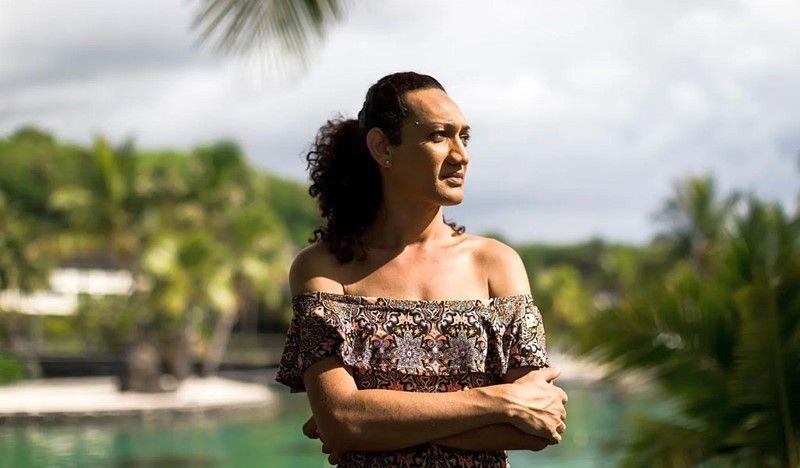 Mahu, Tahitian "third sex".
As we all witness daily, this topic evokes strong emotions and reactions. Traditionalists believe that sex and gender are inextricably linked and determined by biology, so for them, there are only two sexes/genders. Progressives view sex and gender as separate concepts and support the idea of a gender spectrum. The scientific community generally acknowledges the complexity of sex and gender, but debates about many details continue. Still, there’s growing recognition of the importance of providing support and options for these individuals, rather than immediately "correcting" them at birth to fit into traditional male or female categories. LGBTQ+ rights activists fight for broader societal acceptance of diverse gender identities, while skeptics question whether the new definitions of gender are scientifically based or socially beneficial.
If you’re confused by all these terms, facts, options, and phenomena, don’t worry. Personally, I still find it easier to understand gender identities than IKEA furniture assembly instructions. After all, perhaps the most important thing to remember is that behind all these concepts, debates, and changes are real people with real lives and experiences. Regardless of our personal beliefs, empathy and respect for others should be the foundation of any discussion on this topic.
And if all this seems too complicated, you can always take comfort in the fact that at least you’re not the only one confused. After all, confusion is the first step to understanding. Or to even greater confusion. Either way, at least you’re not alone!
After stumbling through the concepts of sex and gender, what conclusions should we ultimately draw as the fundamental idea?
I would suggest these six:
- Human biology is far more complex than traditional perceptions: sex is not always a simple, binary category.
- Human society is even more complex: gender is a social construct that varies greatly between cultures and changes over time.
- Human Identity Is Most Complex: How someone feels and identifies is deeply private, a personal question.
- Science Advances: Our understanding of sex and gender continually deepens.
- Society Adapts: Laws, institutions, and norms change to reflect new understanding.
- The Debate Continues: This topic is still intensely debated and will likely continue to be (forever?).
Igor ‘Doc’ Berecki is a pediatric intensivist at the Department of Pediatric Intensive Care, Children’s Clinic, Clinical Hospital Center Osijek. He advocates for evidence-based medicine and science in theory and practice.
The Dolphin Who Loved Me
In the 1960s, Margaret Lovatt was part of a Nasa-funded project to communicate with dolphins. Soon she was living with ‘Peter’ 24 hours a day in a converted house.
LGBT in 19th-Century Serbia
Many Turks, especially the more respected and wealthy, kept Serbian young men as lovers, so-called adžuvans or đojlens, who served for money. Even the honorable vizier had a whole bunch of them, and a special official oversaw them.
The Homosexual Role
The current conceptualization of homosexuality as a condition is a false one, resulting from ethnocentric bias. Homosexuality should be seen instead as a social role.