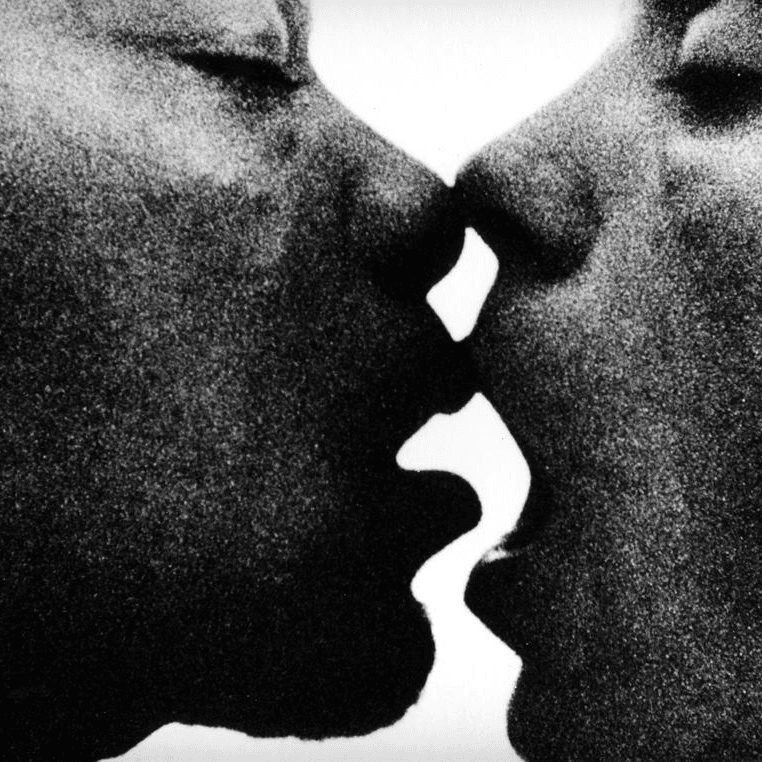
Homosexuality on Film: Gay and Lesbian Artistic and Avant-garde Cinema
Ivana Kronja
The representation of homosexuality in film is as old as film itself. However, the history of films on homosexual themes has long been hidden, although this kind of film had its golden periods, such as the time of the Weimar Republic (1918-1933)[1], whose culture was characterized by greater tolerance towards freer expressions of sexuality, although not complete liberalization in this regard [2]. Within that culture, some of the first feature films about gay and lesbian subjects emerged: "Different from the Others" (Anders als die Andern, 1919), directed by Richard Oswald, and "Girls in Uniform" (Mädchen in Uniform, 1931), directed by Leontine Sagan.
"Different from the Others" (1919), directed by Richard Oswald, and "Girls in Uniform" (1931), directed by Leontine Sagan, were some of the early feature films produced by the renowned film company Aufklärungsfilme, featuring three rising stars: Conrad Veidt, Reinhold Schünzel, and Anita Berber, with the appearance of Magnus Hirschfeld, the leader of the largest gay organization in Germany at the time, in the role of a professor. It was a true cinematic film, shown in leading cinemas, and received positive critical reviews in the press. However, the film sparked controversy, street protests in Berlin, and bans by the police in Vienna, Munich, and Stuttgart, which only contributed to its popularity. From 1919 to 1920, it broke all attendance records, prompting state censorship to ban it. However, the judicial ban was not complete, allowing the film to be shown for medical and educational purposes. In the 1930s, the Nazis practically destroyed all copies of the film, of which only a shortened Soviet version with Cyrillic intertitles is preserved today. The film's plot revolves around a love story between the famous violinist Paul and his student Kurt, whose parents, after being advised by a doctor that such orientation cannot be influenced, allow him to stay with Paul. A young man named Franz blackmails Paul and disrupts his relationship with Kurt (telling Kurt that Paul pays for his love). Meanwhile, Paul attends a lecture on homosexuality by Hirschfeld with Elsa, who is in love with him, and she accepts the truth about him. Franz ends up in prison for blackmail, and Paul for homosexuality. When Paul is released from prison, he finds that his friends have abandoned him and commits suicide. Kurt weeps at Paul's coffin, but at the doctor's urging, he dedicates himself to fighting prejudice. At the end of the film, a magical hand erases Article 175 from the book of laws, which had previously haunted Paul as a ominous vision. According to Dyer, the film has an enlightening character regarding the understanding of homosexuality as a natural phenomenon that should not be punished, but there is also a certain discord between the tragic scenes and the optimistic tone of the lecture, perhaps stemming from the fact that some scenes are missing in the current version (12).
The first study dedicated to homosexuality in film came from the pen of the American dandy intellectual, poet, film critic, and homosexual Parker Tyler: "Screening the Sexes" from 1973. According to Anneke Smelik, this work represents a camp classic that uses delirious, politically incorrect language and misogyny, highlighting avant-garde and art film at the expense of Hollywood and advocating for the liberation of libidinal pleasures with a revival of pagan-antique spirit, thus anticipating today's preoccupations of queer theory. Following that, Vito Russo writes the first politically conscious history of gay and lesbian cinema. Russo's main concern is to make gays and lesbians visible, highlighting their presence and creativity in the history of film. However, this study approaches the topic too idealistically, seeing the history of gay cinema insufficiently historically, as a progressive development, neglecting lesbian film history as well as class and racial differences among homosexuals. Subsequent studies of this kind of film pay more attention to these specificities and differences.
As for the representation of homosexuals in mainstream film, it has consistently been marked by stereotypes, whose function is normative: social stereotypes serve to reinforce the power of the dominant group (heterosexual men of the white race) while simultaneously marginalizing and excluding other social groups (homosexuals, blacks, women, the working class). Stereotypical portrayals of gay men and lesbians as drag queens and dykes are based on the ideology of sexual difference and underline binary gender division: they show that homosexual men or women have failed in comparison to the heterosexual norm, that they can never be real men and women.
The stereotyping of gay and lesbian characters in classic Hollywood and other films was accompanied by widespread homophobia. Some male stars, such as Montgomery Clift and Rock Hudson, had to conceal their homosexuality to maintain their reputation as romantic seducers. Until the 1960s, homosexuals and lesbians were stereotypically portrayed in films as weaklings and butch women. Avant-garde cinema, however, has always been more liberal in its portrayal of the body and psychology of its characters than mainstream film. Part of its history includes gay and lesbian cinema, which resisted these stereotypes and brought untold experiences to light. One of the early examples of open gay themes in avant-garde cinema is Kenneth Anger's "Fireworks" from 1947. "Fireworks" is filled with scenes of violence, male eroticism, and sadomasochistic fantasies. Another example is Jack Smith's famous work, the polysexual baroque fantasy "Flaming Creatures" from 1963. Giannetti highlights that avant-garde cinema has a long history of intentionally shocking the establishment, and that homosexual themes are just one form of attack on conventional morality. One critic even complained about a homosexual conspiracy within the avant-garde.
A significant early gay classic is the avant-garde film "Chant d'Amour" (Love Song, France, 1950) directed by Jean Genet. The almost fatal love triangle between a prison guard, a black inmate, and a young man they both fall in love with evolves into the only film Genet ever made, into a sort of existential and anthropological debate about man's subordination, his feelings, and basic instincts in civilization, metaphorically represented by the prison. "Chant d'Amour" also contains autobiographical moments and direct prison poetics, as Genet himself was a vagabond and a criminal in his youth, spending four years in prison. Stylistically, this film is inspired by Cocteau's work "Blood of a Poet" and Kenneth Anger's "Fireworks" (1947), and is closer to the cinematic avant-garde of the 1930s than to films around 1950. "Chant d'Amour" is easily comparable to Genet's famous literary works "Our Lady of the Flowers" and "Querelle of Brest." The film is unmistakably Genet's, with its recognizable motifs of prison, violence, unrestrained male homosexuality in conflict with hypocritical repression, as well as floral motifs, and represents one of the strongest statements by a writer in the film art that seamlessly transforms his fictional voice into purely cinematic concepts.
Genet's shifting of the characters' perspectives is dizzying and energetic; it forces us to question who creates what meaning. This innovation also hints at the influential literary movement of the new novelists Alain Robbe-Grillet and Marguerite Duras (an excellent film applying the ideas of this movement is Alain Resnais's "Muriel" from 1963). The film was censored in France and America, where all of Genet's works were banned, but Jonas Mekas managed to smuggle it from Europe and screen it at the Film-Makers' Cooperative, after which he was beaten by the police and thrown in jail, only to receive a six-month suspended sentence (!) after the screening of another revolutionary LGBT film, Jack Smith's "Flaming Creatures." Genet later disowned the film in his fight against censorship, which began in 1975 when he disturbingly refused the French Ministry of Culture's award of 90,000 francs because he (not unjustifiably) equated it with censorship.
Richard Dyer (1990) places this short erotic fantasy in the famous tradition of infamous poets of French literature, including De Sade, Baudelaire, Rimbaud, Verlaine, and Cocteau, which connects the motifs of evil, crime, and (homo)sexuality. Offering a detailed analysis of narrative structure, scenes, and perspectives in this film, Dyer sees its eroticism as an expression of tension between politicality and pleasure. Some authors criticized Genet for the homophobic representation of erotic pleasures, while others approved and almost celebrated the sadomasochism portrayed in his film. According to Dyer, the power and desire play as a kind of Genetian tradition became the subject of some gay and lesbian films of the 1980s, such as "Querelle" (Germany, 1982) by Rainer Werner Fassbinder, based on Genet's 1947 novel.
The gay liberation movement emerged alongside other revolutionary movements of the 1960s, including the feminist movement and the civil rights movement. Accordingly, from the sixties onwards, feature films and experimental films with gay themes, so-called gay films, became much more common, especially in America and Europe. One part of such feature-length narrative films consists of so-called coming-out films, which show the first homosexual experience of a young person, male or female.
Until the sixties, films could have a homosexual subtext or allusions to homoeroticism between male characters and, less commonly, female characters. Such films include classics such as John Huston's "The Maltese Falcon" (1941), Alfred Hitchcock's "Rope" (1948), and other film noirs, Nicholas Ray's "Rebel Without a Cause" (1955), as well as many action macho films, which offer a picture of an exclusively male world, with central themes, according to Rikke Schubart, of suffering and acceleration. These could be buddy films, emphasizing the partnership and closeness of two men (usually policemen or detectives), or films in which the hero is alone against all, like those in the Rambo series. The action film establishes its hero as a suffering Christ, who rises from the dead as an almighty avenger. With its emphasis on the male body, the latter type of film also allows for suppressed homoerotic interpretations.
Many of the significant authors in the history of film were homosexuals, so the specific gay sensibility marked both the aesthetics of their work, regarding both homoerotic and other themes. Among them are European directors Rainer Werner Fassbinder (1945-1982), German, Pedro Almodóvar (born 1949), Spanish, and Derek Jarman (1942-1994), British. Even filmmakers who are not gay address homosexual themes, often very successfully: some such examples in contemporary film include Antonia Bird's "Priest" (1994) and Ang Lee's Academy Award-winning "Brokeback Mountain" (2005).
Rainer Werner Fassbinder is one of the leading representatives of the New German Cinema of the 1960s and subsequently the so-called New German Cinema of the 1970s, along with Wim Wenders, Margarethe von Trotta, Werner Herzog, and others. Born in Bavaria to a middle-class family, Fassbinder dropped out of high school to take acting lessons. In 1966, he unsuccessfully attempted to enroll in the newly established Academy for TV and Film in Berlin. He joined the theater group "U podrumu" in 1967, which was soon shut down by the police, after which he and the same colleagues founded their own theater, Antiteater, in Munich in 1968, where he wrote, directed, and acted. With the members of this theater, he began shooting feature films the following year. Until his premature death at the age of 37, R.W. Fassbinder created a fascinating body of work of over 40 films and television productions, receiving multiple awards worldwide. In a political sense, this author embodies the expression of a generation born immediately after the war, rebelling against the system: capitalist economy, conservative state, and the authoritarian legacy of Nazism. In his early films, Fassbinder applies the genre conventions of American gangster film noir in the milieu of Munich's underground; in later, historical films, such as "The Marriage of Maria Braun" (1978), "Berlin Alexanderplatz" (TV series and film, 1979-80), "Lili Marleen" (1980), "Lola" (1981), and "Veronika Voss" (1981), he shows the inevitable conflicts arising from the collective denial of the past, visible through the micropolitics of desire (Gatari) of ordinary people, who dream of an undamaged life (Adorno) (Kaes 1996: 619). Fassbinder's films generally deal with unfulfilled desires of individuals, the exploitation and exploitability of their emotions, and the self-destruction they inflict upon themselves (same). All of Fassbinder's films are ingeniously dramatized and occasionally didactic messages about what it means to have power over someone's capacity to love, and consequently live within the mutual dependencies of certain generosity and guilt (Elsaesser 1997: 19). The gay sensibility that pervades Fassbinder's work, culminating in his last, almost testamentary, film "Querelle" (1982) based on the novel by the iconoclastic gay author Jean Genet from Brest in 1948, which openly deals with the theme of homosexual love and passion, is reflected in his emphasis on melodramatic plots and exaggerated, destructive emotions, passions that tear apart ordinary, imperfect people, in the glamour and narcissism of leading female characters (often interpreted by Hanna Schygulla, one of Rainer's favorite actresses) and in the overall theatrical stylization of scenes, which alludes to camp aesthetics.
Pedro Almodovar is one of the representatives of camp aesthetics in film, the author of melodramas that turn into absurd comedies, and vice versa, and one of the filmmakers who pushes the boundaries of normality within male and female identity in contemporary film, doing so with exceptional conviction and sincerity, despite the artificial ambiance of his films. A cosmopolitan, popular, commercial, polemical, provocative... (Payán 2004: 13), Almodovar immediately became one of the icons of the so-called Madrid Movida, a broader cultural movement that encompasses Madrid and Spain after Franco's dictatorship, characterized by pop aesthetics, sexual freedom, drug use, the flourishing of rock and pop music and vibrant nightlife, as well as a strong resurgence of art, from literature, visual and applied arts (comics, advertising) to film. The film that launched Almodovar into the international orbit as one of the most exciting new European directors was "Women on the Verge of a Nervous Breakdown" (1988), which also became one of the most commercially successful Spanish films ever (Evans 1996: 10). Almodovar's films, with their rich blend of styles, combining pop aesthetics with a powerful depiction of sexuality and the dialectics of desire, and dramatic plots based on equally treated and intersected triangles and fatal loves of homosexual persons, transvestites, as well as heterosexual people, as in "All About My Mother" (1999) and "Bad Education" (2004), have been and are particularly popular among youth and sexual minority audiences, i.e., the gay population (12-3).
A literature and painting student, Derek Jarman came to film almost accidentally when he accepted the role of set designer for Ken Russell's film "The Devils" (1972). Shortly thereafter, he began making very personal film records in 8mm format. His first feature film was "Sebastiane" (1975), a gay narrative with dialogue in Latin set in the late Roman Empire, followed by a celebration of punk aesthetics in the film "Jubilee" (1977), a cult film of the punk movement, and an alchemical version of Shakespeare's "The Tempest" (1979). After visiting the USSR in 1984, Jarman made "Imagining October" (1984), combining Super-8 film material with video. His subsequent films of gay aesthetics, which connect high culture with alternative, amateur technology, are "The Angelic Conversation" (1984) and "The Last of England" (1987), and he further develops this aesthetic with more conventional works, top-notch 35mm feature films "Caravaggio" (1986) and "Edward II" (1991) based on Shakespeare's play, in which he returns to the Elizabethan era (Bowron-Christie 1996: 18). In "Edward II," following the style already used in "Caravaggio" to emphasize the continued relevance of his sexual and political themes, Derek Jarman deliberately juxtaposes and conflicts the 14th century with the 1990s. We see Annie Lennox singing Cole Porter's song, priests in collars spitting on Gaveston after his banishment, and gay activists with posters attacking the royal palace wearing pink triangles, the symbol by which homosexual prisoners were marked in Nazi camps (Nelmes 1996: 285). He thus achieves an extremely postmodern poetics of simultaneous coldness and warmth, love and hatred, which constitutes the universal backbone of the story itself. Jarman's last major film was a brilliant study of an unusual gay icon, "Wittgenstein" (1993), followed by an extraordinary tale of temporary blindness and meditation on his own life and imminent death (Jarman dies prematurely from AIDS), "Blue" (1994) and, posthumously, "Glitterbug" (1995).
In terms of body and gender representation, a gay film primarily offers the portrayal of socially unacceptable or at least not very desirable homosexual relationships between men, with or without scenes of sexual contact, and with a representation of the male body that is more detailed and present than usual in mainstream cinema. In this sense, it subversively acts on socially desirable representations of masculinity, or the gender identity of heterosexual men. Precisely because of this prohibition, the preoccupation with realms of passion and desire, which is either realized or thwarted in repressive social conditions, is particularly emphasized in this type of film. The visualization of the male body as an object of homoerotic desire is very pronounced here. Critic Jack Babuscio offered such a definition of gay sensibility, as present in gay cinema:
"I define gay sensibility as a creative energy that expresses a consciousness different from the mainstream; heightened awareness of certain human emotional complications stemming from the fact of social oppression; in short, a perception of the world colored, shaped, directed, and defined by someone's homosexuality." (Nelmes 1996: 263)
Most of the above also applies to the so-called lesbian film, which depicts female homosexuality. Some repression of lesbian film compared to gay film, which is more present in the broader public, including film literature, is a consequence of the general neglect of women's themes and fates in our patriarchal culture: the disparity in women's rights is present even when it comes to the rights of homosexual women. However, especially since the rise of the modern feminist movement of the 1960s, lesbian cinema has flourished and developed as a significant stream within that part of film creation that offers an alternative approach to gender roles and sexuality.
Lesbian film and video developed in parallel with the growing women's movement, almost always in worse financial conditions than its male equivalent, gay film, and found its base in film clubs and workshops dedicated to this type of film (261). A significant part of lesbian film, due to material limitations and distribution problems, consists of alternative and short films, but, in our opinion, this is precisely what makes this type of film vital and gives it a fundamental base for occasional direct or indirect forays into the arena of mainstream cinema.
In her book on lesbian film, from subtle lesbian motifs in classical Hollywood cinema, through lesbian vampire films to radical films of the 1970s by Barbara Hammer, "Vampires and Violets" (1993), theorist and director Andrea Weiss discusses the problems of identification and representation of lesbians in film. Weiss clearly presents the ongoing theoretical debate on how difficult it is to represent autonomous female sexuality in the existing system of representation, which is constantly focused on the male heterosexual gaze directed at women. She critically analyzes many feature films that stereotypically portray lesbians, remaining faithful to conventional representations of sexuality, while on the other hand emphasizing those films, usually artistic and authorial, that have managed to creatively overcome the limitations of the conventional gender representation system. One of them is Marlene Gorris's film "A Question of Silence" (Netherlands, 1983), a work that portrays lesbian love relationships as part of the continuum of relationships among women, which are depicted as more important than their relationships with men, as Weiss notes.
One of the early classics of lesbian cinema is the German film "Maedchen in Uniform" (1931) directed by Leontine Sagan, based on the play by lesbian poet Christa Winsloe. "Maedchen in Uniform" is a powerful drama that offers a critique of authoritarianism and in which the love between the two female protagonists, a teacher and a student, triumphs over the harsh regime at their boarding school (Nelmes 1996: 258). "Maedchen in Uniform" enjoyed tremendous popularity, from Germany where it was considered the best film of the year, to the USA where it was hailed as one of the most humane films ever made and as a drama about the need for tenderness and sympathy versus the cruelty of the tyrannical school management system. Siegfried Kracauer highlights the outstanding performances of Herta Thiele as the student Manuela and Dorothea Wieck as Teacher von Bernburg, as well as the direction, which, more casual than bold, is distinguished by the most subtle shading, but criticizes the film for not attacking rigid Prussian discipline but only demanding its humanization, not social change (Krakauer 1997: 308-9). This film is relevant both for the history of cinema in general and for the history of LGBT cinema. It explicitly deals with the theme of lesbian love, which is sometimes overlooked or euphemistically portrayed in its depictions. The Weimar lesbian culture, embodied in "Maedchen in Uniform," is seen by Day as a feminine form of lesbianism, which is no different from the traditional conception of femininity; on the contrary, she sees lesbianism as the most feminine form of female identity, as pure and original, natural femininity, and not as an expression of independence from men, as contemporary feminist and lesbian movements will insist on (38).
The most famous author of classical Hollywood cinema known to be a lesbian was Dorothy Arzner, exceptionally successful as one of the few women directors in the Hollywood industry of her time. Arzner's films, often comedies, typically revolve around stories of warm friendship and collaboration among women, as in "Wild Party" and "Dance, Girl, Dance." Both of these films are characterized by a preoccupation with dance, as it embodies the relationship between the private and the public, and simultaneously combines women's desire for artistic expression with the desire for community (Mayne 1994: 131). As Judith Mayne highlights in her well-known study of Arzner, "Directed by Dorothy Arzner" (1994), the development of heterosexual romance in Arzner's works threatens all-female worlds, and while they often end with an inevitable happy ending, such endings seem fragile in relation to the amount of time and energy devoted, on-screen, to female worlds and communities. Arzner achieves this effect as a director precisely through the original representation of women in her films, from plot to framing, where she places women as couples at the center of the frame composition, depicting a man from some of the girls as a phenomenon of secondary importance, even as an intruder who then falls out of the frame. She also avoids traditional fetishization of the female body or critically mocks it: in "Wild Party," she (through the plot) does not allow the heroines to enter a party where women play in skimpy costumes, which symbolically opposes the stereotypical image of women (135), while in "Dance, Girl, Dance" she constantly reminds us that there are women on both sides of the stage, and that they enjoy watching each other (147). In these films, the story embodies the fantasy in which the space of female friendship and heterosexual romance is not only compatible but entirely intertwined (136). With her bold portrayal of unshakable female friendship, solidarity, and intimacy, Arzner opens up space for an alternative, homosexually sensitized reading of her work, which can establish many elements of lesbian sensibility, not exhausting its meanings affirmatively, positively oriented towards women.
Lesbian feminist film represents a special category within the history of avant-garde cinema. Richard Dyer defines lesbian film of the 1970s as lesbian feminist cultural film. This type of film develops in line with the idea of gender-specific women's culture and woman-identification-with-women emerging from the cultural feminism of that time, which indeed originated from radical feminism but also diverged from it. The tradition of lesbian separatism, different from this type of film, developed only in the 1980s, most notably in the Dutch film De Stilte rond Christine M by Marleen Gorris from 1982. Preceding lesbian films of the 1970s were filmmakers who explored specifically female experiences, such as Maya Deren, Constance Beeson, Storm de Hirč, Marie Menken, Gunvor Nelson, Carole Schneeman, and in Canada, Joyce Wieland.
Motifs and iconography of lesbian cultural feminist film primarily encompass images of powerful women from history and mythology, from witches and Amazons to Eve and the goddess of hunting Diana, as well as popular blues singers Janis Joplin and Ma Rainey, who was a lesbian. This film is then based on specifically female experiences, whether they are women's bodily experiences of menstruation, childbirth, and sexuality, traditionally female activities like cooking, crafts, clothing, and jewelry making, or daily experiences of women, such as diaries, letters, and oral stories. These films often combine all these elements, with many of them accentuating sexuality interwoven with women's everyday lives. In depicting the female body and sexuality, this type of lesbian film employs rich floral, vegetal, and even mineral symbolic iconography (rocks in Barbara Hammer's Multiple Orgasm (1976), which symbolize female genitalia). Vaginal scenes in film and art in general of cultural feminism, for example, works by Judy Chicago, Miriam Shapiro, and Hannah Wilke, are primarily motivated by a desire to overcome the usual misogynistic aversion to female intimate organs in male patriarchal culture, to reveal their beauty and value within female-female identification. Associating women with nature also contributes to the universality of women's existence and significance. Vaginal iconography can also be found in many works of female artists from the past or those not belonging to feminism, which for some authors means that it is part of essential female art, not just a political-aesthetic project.
Frequent depictions of the clitoris, real or symbolic (in fruits from nature), are also related to the rediscovery of clitoral orgasm by feminists. Symbolism of circles and merging as characteristics of the female being and sensibility, as opposed to phallocentric scenes and discourse, is an important feature of this type of film.
Cultural-feminist art and film also highlight intuition and emotion, the unconscious, mystical, and spiritual as characteristics of the female world stemming from the right hemisphere of the brain, which is dominant in women. Returning to nature and its cycles in these films is understood as the basis of female spirituality. In the film Luna Tune (1977) by Carol Clement, the transformation of two women into birds and the moon is depicted through sand animation, as an ancient female symbol. Since they are unconscious, natural, and ancient, these sources of specifically female scenes are, according to the theory of cultural feminism, beyond the reach of male definition. Constantly associating lesbianism, understood in the broader context of women's culture rather than just sexuality, with nature in these films opposed the dominant tendency of Western thought in which homosexuality was considered a disease. However, it should be noted that the spiritualization and naturalization of lesbian love could overshadow the reality of repression against homosexual individuals and the class, race, and cultural differences among lesbians. Lesbian feminist cultural film celebrates and often directly portrays lesbian sexuality, but not necessarily with the intention of arousing erotic excitement in the viewers. Its function lies primarily in the rediscovery of female identity and how women perceive themselves in the external world, in the world of their own intimacy, and with other women.
One of the leading representatives of this type of film is Barbara Hammer, an American author from New York. Other significant authors include Suzanne Santoro, Anne Severson, Virginia Giritlian, Barbara Jabaily, and others. Barbara Hammer is one of the feminist directors who used experimental film form as a freer field of expression, liberated from illusory gender representations present in mainstream film. One of the motives guiding lesbian authors, besides Hammer and Connie Beeson, Jan Oxenberg, Barbara Jabaily, Ariel Dougherty, and others, was the effort to depict lesbian sexuality outside the pattern of pornography, in which scenes of their bodies are appropriated by men, offering an Oedipal regression for the male viewer (the little boy has all the mommies to himself - safe in the absence of the intimidating father figure), and to enable the creation of lesbian lesbian erotic film.
Barbara Hammer graduated in psychology (at the University of California, Los Angeles) and completed postgraduate studies in English literature and film (San Francisco State University), attending classes in digital media as well. Hammer lived in a heterosexual marriage as a homemaker for about ten years before teaching at a college in California in her early 30s. During that time, she realized she was a lesbian while talking to a colleague in a feminist group. She soon began to engage in filmmaking and shot her first 16mm film, I was/I am (1973), as an homage to Meshes of the Afternoon by Maya Deren (in which Maya's house key becomes Barbara's motorcycle key). This autobiographical film connects moments of repression of women from the author's life with the pain of her mother's death. It is the first part of a trilogy that also includes X (1974) and Psychosynthesis (1975), introspective works in which aggressiveness, progressing towards the end of the trilogy, evolves into a feeling of pleasure and peace. Second in line, Barbara Hammer's student film, "Dyketactics" (1974), openly addressed the theme of lesbian love. Despite expecting to scandalize her male professors, the film, according to Hammer, was very well received by them. As Hammer testifies, after making love to a woman, her sense of touch intensified, which distinctly marks her subsequent films on the topic of lesbian sexuality. "Dyketactics" contains 110 frames of touch, from walking on grass, holding hands, to kisses, caresses, and more. "Menses" (1974) is a satire on menstruation as a purely female experience. Hammer also made films emphasizing the collectivism of lesbians/women, such as "Sisters!" (1974), "Gay Day" (1974), and "Superdyke" (1975), based on a performance by a group of women who invaded Barbara's apartment and then roamed all over the city, a trash-style film with a humorous tone, whose second part shows the ritual unity of women in nature, as well as films about collective female rituals and spirituality: "Women’s Rites" (1974), "The Great Goddess" (1977), "Sappho" (1978), as well as a series of other films that combine female sexuality and spirituality. Some of the most delicate works on this subject are certainly "Multiple Orgasm" (1976) and "Women I Love" (1976-9), a film shot over several years in which the author uses a range of sophisticated filming techniques and different representations of the female body, sometimes equating the camera's touch with intimate female touch. "Double Strength" (1978), which includes beautiful scenes of Barbara's then-partner Terry Sendgraff on the trapeze, is considered one of her most beautiful films. Dajer highlights Hammer as an author who radically questions the usual boundaries between author and film, projection and reality. She collaborated with other female authors on a number of films. In most of her films dealing with love relationships with women, Hammer advertises her presence through details, mirrors, and camera positions, and often participates in discussions at screenings of her own films: at the screening of "Available Space" (1978), she appeared next to the screen, and while the film was playing, she physically pushed the screen through the space!
Barbara Hammer divides her work into:
- the 1970s period and explicitly lesbian films primarily dealing with the representation of the body and sexuality;
- experimental films of the 1980s exploring the optical and dynamic properties of film, including "Parisian Blinds" (1984), "Tourist" (1985), a parody of tourism, "Optic Nerve" (1985), a film about the author's grandmother, in which she first used an optical printer, and "Endangered" (1987-9), about endangered animal species. These films are characterized by rich montage rhythms, strong colors, and visual effects, created using an optical printer and later a computer;
- experimental documentary film about lesbians and gay men [11] that developed in the 1990s; Hammer's trilogy in this genre, consisting of "Nitrate Kisses" (1992), "Tender Fictions" (1995), and "History Lessons" (2000), is already considered a classic in this type of film.
Hammer is the author of some of the first explicitly lesbian films in the history of cinema and a total of 80 films and video works. She has won numerous international awards, including the Frameline Award for her contribution to lesbian and gay cinema. Barbara Hammer's intense creativity places her alongside Stan Brakhage and Andy Warhol as a major force in independent film; she consistently challenges the patriarchal forces that implicitly and often 'invisibly' operate within independent film practice, as noted by Wheeler Winston Dixon in his history of American experimental film of the 1960s, "The Exploding Eye" from 1997. Barbara Hammer explains her work in film as follows: "I use film and video as a medium through which I can make the invisible visible. Anyone can be left out of history. I consider it necessary to uncover and celebrate marginalized people whose stories have not been told. A multi-layered film that activates both the gut and the intellect of its audience. I want people to leave the screening with a fresh perception and encouraged to take active and political stands towards social change in the global environment".
The poetics of gay and lesbian film differ somewhat, offering two paradigms of homoerotic film. Gay film rests on a sort of tragedy of desire, which significantly marks the entire cultural and artistic heritage of Judeo-Christian civilization, offering a paradigm of repressed desire that necessarily explodes, regardless of the consequences: the need to fulfill forbidden, repressed sexual-emotional desire at all costs is charged with homosexual male film. On the other hand, lesbian film primarily bases its poetics on a sense and state of oceanic belonging, which occurs in complete balance of the individual with nature, the world, and oneself. The peaks of lesbian film are characterized by immense, infinite intimacy, the bliss of touch, and merging between partners, in this case, partners, the state of return to the mother as a universal refuge, cosmos. For these reasons, gay film generally had slightly greater affirmation than lesbian film in the broader cultural sphere, marked by the presence of the idea of sexual shame and guilt and the issues of desire and its realization. In contrast, the bliss of the all-female world, as offered in the poetic-anthropological sense by the anthology lesbian film, has a somewhat more difficult reception since the female principle and sensibility in general are traditionally suppressed in our civilization. Precisely because of these aspects, which universally touch on questions of love and desire, gay and lesbian film can offer much to the heterosexual viewer, while enabling the homosexual and/or bisexual viewer direct identification with the homoerotic romance that is lacking for them in mainstream narrative film, where they can only experience it indirectly.
It is important to note that since the 1970s, there has been a larger number of lesbian and gay film festivals worldwide: the first was in San Francisco, then in London, Paris, New York, Toronto, Berlin, and other countries and cities. Their development went hand in hand with the rise of the political awareness of homosexuals. The function of these festivals is, like mainstream festivals, to establish cultural and film circles of authors, critics, and audiences, in this case sensitized and interested in issues of homosexuality and the film work of lesbian and gay authors, to create a market for this type of film, and to promote low-budget, short, and video films, as well as films from the third world that otherwise struggle to be realized, and then publicly promoted.
Footnotes
[1] About this politically tumultuous and tragic, yet artistically and culturally exceptionally fruitful period of German history, which gave rise to the Bauhaus movement, the Warburg Institute, literary, visual, and film expressionism, etc., see for example Peter Gay's work "Weimar Culture", Belgrade: Geopoetika-Plato, 1998.
[2] Protests regarding homosexually themed films, as well as state censorship of them, also accompanied cultural events in this field in the Weimar Republic (see more detailed in: Dyer 1990, chapter: "Weimar: Less and more like the others", 7-46).
[3] Films that were shown in our environment are listed only in Serbian translation. Films for which we are not sure if they were shown here are listed in their original titles as well.
[4] A film style developed in Hollywood during the 1940s and 1950s, characterized by expressionistic photography, psychological and erotic tension, and a crime plot. As Miša Nedeljković emphasizes, there are also so-called pre-noir, post-noir, retro-noir, and neo-noir, from the 1990s to the present day (13). For more details on film noir, see: Nedeljković, Miša American Noir Film, Belgrade: Hinaki, 2006.
[5] Judith Mayne's study itself is not a conventional biography but rather a study on representation, from those in films by Dorothy Arzner to the self-portrait Arzner created in public (last page of the edition, 1994).
[6] In the film "Wild Party", for example, her screenplay significantly deviates from the original novel "Unforbidden Fruit" by Warner Fabian (Mayne 1994: 136).
[7] While radical feminism insisted on abandoning male-female gender roles and women's separation, cultural feminism considered it important to encourage the return of women's histories and specifically women's culture within the framework of that history and the present of women.
[8] Anne Koedt is the author of the highly influential article "The Myth of the Vaginal Orgasm", written in 1973, presented at the National Women's Liberation Conference in the USA in 1968 and published in 1970, which opposes the persistent effort of the official public discourse of the 1950s to locate all female sexual experience in the vagina. The significance of the rediscovery of clitoral pleasure for feminists lay in affirming autonomous female sexuality, which is not necessarily tied to men and procreation (Dyer 1990: 184).
[9] An exceptional issue of the magazine "Jump Cut", dedicated to lesbian film, discusses them all, as Kaplan emphasizes (89): "Jump Cut", special issue on "Lesbians and film", No. 24-5 (March 1981).
[10] From Barbara Hammer's oral presentation at a lecture in Belgrade, cultural center "Rex", June 7, 2007.
[11] The same.
[12] I use the term "poetics" in accordance with the definition from the Dictionary of Literary Terms (Nolit: Belgrade, 1985): a term of literary science, which developed from the ancient Greek adjective poetic, related to poetry, meaning poetic art, poetic skill; the term poetics has remained in use for research into conscious and subconscious structural procedures and characteristics of individual writers, thus exploring their specific poetics (568-570).
[13] Richard Dyer compares gay and lesbian film as follows: "Gay films are individualistic, they use psychoanalytic and mythical scenes to express, explore, and heal the self. Lesbian films are no less personal, but much less individualistic: what is personal in them becomes intimacy and inwardness that women share among themselves, and which allows them access to archetypal and spiritual contents" (Dyer 1990: 176).
[14] Like some films by Barbara Hammer.
References
Belina, Mirna and Kožul, Marina (eds.): 25 FPS: International Experimental Film and Video Festival, Catalog, Zagreb, 23-28/09/08. Zagreb: 25 FPS Association for Audiovisual Research, 2008.
Bowron, Astrid, Christie, Ian: The Director’s Eye: Drawings and Photographs by European Film-makers. Museum of Modern Art Oxford, 1996.
Dyer, Richard: Now You See It: Historical Studies on Lesbian and Gay Film. London: Routledge, 1990; 2003.
Elsaesser, Thomas: “A Cinema of Vicious Circles” (15-25). In: Kardish, Laurence, Lorenz, Juliane (Ed.): Rainer Werner Fasbinder. New York: The Museum of Modern Art, 1997.
Evans, Peter William: Women on the Verge of a Nervous Breakdown. London: BFI, 1996.
Gay, Peter: Weimar Culture. Belgrade: Geopoetika-Plato, 1998.
Giannetti, Louis: Understanding Movies (Sixth Edition). New Jersey: Prentice Hall, 1993.
Kaes, Anton: “Rainer Werner Fassbinder (1945-1982)” (618-9). In: Kardish, Laurence, with Lorenz, Juliane (Ed.): Reiner Werner Fassbinder. New York: The Museum of Modern Art, 1997.
Krakauer, Siegfried: From Caligari to Hitler: A Psychological History of German Film (second edition). Belgrade: SKC, 1997.
Mayne, Judith: Directed by Dorothy Arzner. Bloomington: IUP, 1994.
Nedeljković, Miša: American Noir Film. Belgrade: Hinaki, 2006.
Nelmes, Jill (Ed.): An Introduction to Film Studies. London and NY: Routledge, 1996.
Russo, Vito: The Celluloid Closet: Homosexuality in the Movies. New York: Harper and Row, 1981; 1987.
Schubart, Rikke: “Passion and Acceleration: Generic Change in the Action Film” (192-207). In: Slocum, J. David (Ed.): Violence And American Cinema. New York and London: Routledge, 2001.
Smelik, Anneke: “Gay and Lesbian Criticism” (133-145). In: Hill, John, Church Gibson, Pamela: Film Studies: Critical Approaches. Oxford: OUP, 2000.
Tyler, Parker: Screening The Sexes: Homosexuality in the Movies. New York: Da Capo Press, 1973; 1993.
Internet Sources: www.barbarahammerfilms.com/bio.html
Identity and Religious “Coming Outs”
Two Basque films — "Maspalomas" and "Sundays" — have already won over both audiences and critics, while the French film "Couture" has brought together Jolie and Garrel.
'In Every Theatre, People Would Leave"
How 'gay cowboy movie' "Brokeback Mountain" challenged Hollywood – and the US.
18 International Documentary Film Festival Beldocs
Beldocs will take place from May 21 to 27 at 10 locations across Belgrade. The festival will feature over eighty documentaries, ten world premieres, and a strong focus on domestic filmmakers.