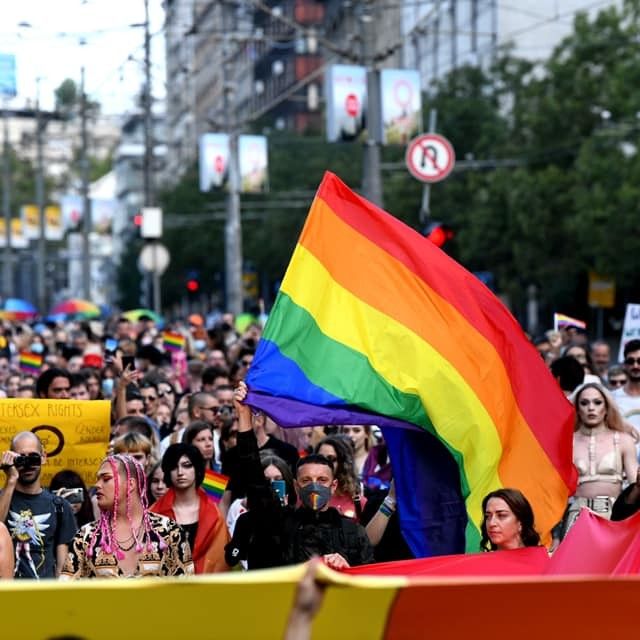
What Is The Point of Pride?
CQS
WHAT’S THE POINT OF PRIDE ANYMORE?
A conversation about Belgrade Pride Parade in the midst of students' protest
On the occasion of the Serbian edition of the book
COMING IN: Sexuality Politics and EU Accession in Serbia
by Dr. Kun Slotmakers, Associate Professor at City St George’s University, London.
Panel language: SERBIAN;
simultaneous translation into English provided.
EUROPEAN HOUSE, corner of Knez Mihailova and Zmaj Jovina streets
SATURDAY, June 21, from 12:00 to 1:30 PM;
COCKTAIL AND REFRESHMENTS until 2 PM
The seventeenth Belgrade Pride Parade will take place on September 6, 2025, in a context quite different from the one in which it emerged—marked by violence, bans, and years-long hiatuses. Today, Pride is held regularly and without major incidents, creating an impression of normalization: unlike in earlier years, media interest and far-right backlash are in decline. Yet, with this stabilization comes a sense of stagnation—participant numbers have plateaued in recent years at an average of 3,500–4,000, raising questions about the (limited?) reach of the event and deeper issues surrounding the acceptance of the LGBT+ community in society.
Does the lack of growth in attendance indicate that broader societal progress in accepting diversity has stalled? Are homophobia and transphobia truly on the decline, or have they simply retreated into less visible but equally persistent forms? Pride is also facing various critiques: from concerns about the democratic nature of its organization, to its possible instrumentalization by state policy or branding strategies, and to accusations that it neglects class differences and has dulled its political edge in favor of a carnivalesque aesthetic and commercial sponsorship.
This year’s context brings a new opportunity: the student movement, which has emerged in protests against political violence, has already received support from Pride. A new question opens—could students reciprocate that support by joining the Parade, helping to expand its reach and repoliticize its message? Such an alliance could once again strengthen Pride as a space for fighting broader social justice battles—not just for symbolic visibility.
These and other important questions will be discussed by the following panelists:
Koen Slootmaeckers, Associate Professor at City St George’s University, London
Sonja Sajzor, trans activist, drag performer, and DJ
Mina Hagen, Assistant Professor at the Department of Psychology, Faculty of Media and Communications (FMK), and organizer of the 2009 and 2011 Prides
Dušanka Tomašević, Advocacy Program Coordinator at the lesbian human rights organization LABRIS
Nikola Brkljač, participant in the student protests, former coordinator of the Pride Info Center, and member of the Belgrade Pride communications team
 About the book COMING IN: Sexuality Politics and EU Accession in Serbia
LGBT rights have become increasingly prominent in the EU enlargement process, serving as a litmus test for European identity. However, the promotion of these norms has also opened space for political conflict. Rethinking European integration, the author argues that EU enlargement is a process of negotiated transformation in which EU policies and norms are defined, "translated," and reshaped. Empirically, the book analyzes the promotion of—and resistance to—LGBT equality norms in the context of Serbia’s EU accession, while also going beyond policy to explore how negotiated transitions affect everyday life.
This study was awarded Best Book by the European Union Studies Association (EUSA) in 2025 and was shortlisted for the Best Book Prize by the University Association for Contemporary European Studies (UACES) in 2024.
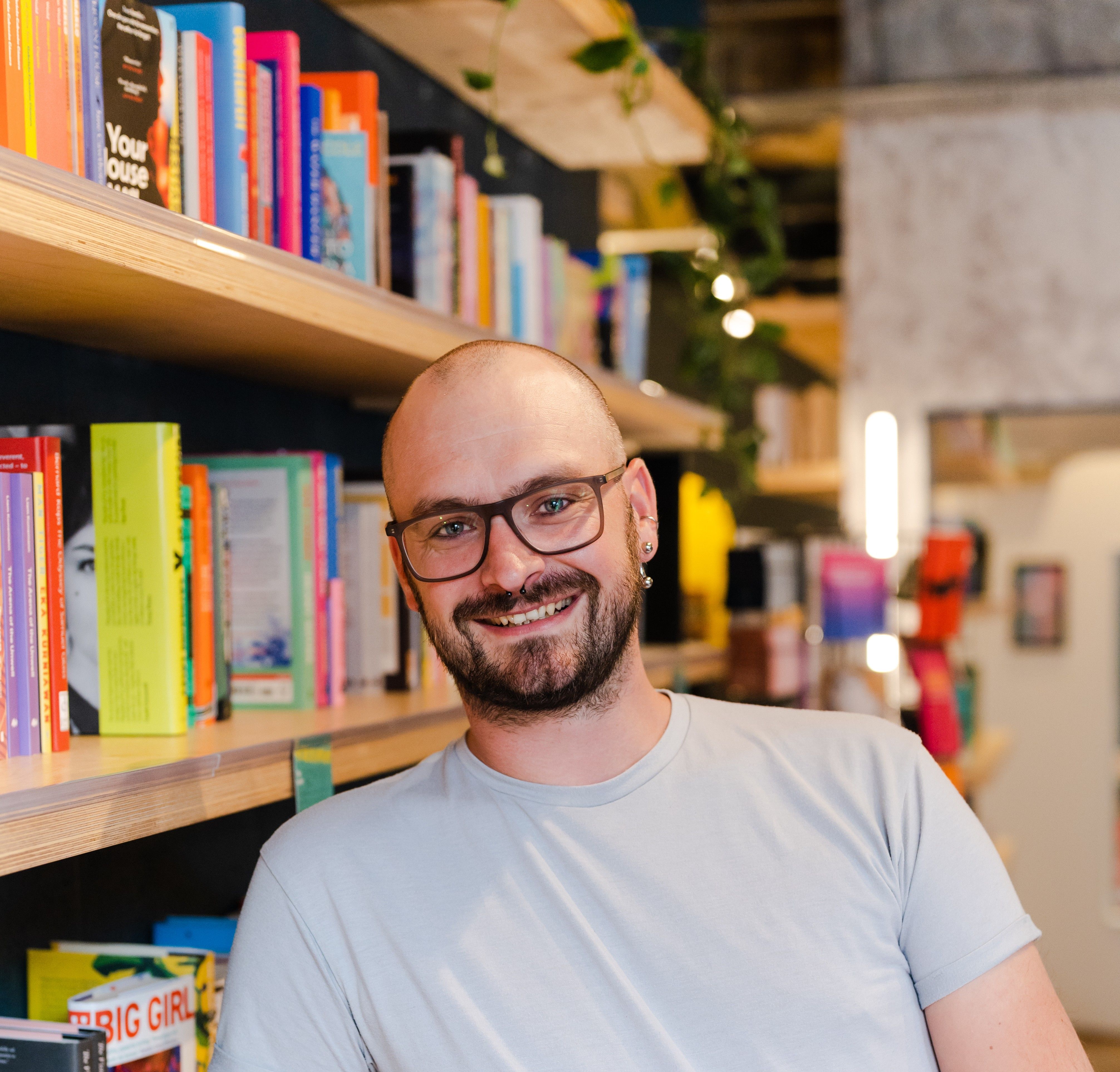 About Koen Slootmaeckers
An award-winning political sociologist whose research sits at the intersection of queer theory, LGBT rights, and the politics of the “Other.” His work explores how sexuality is mobilized in both national and international politics, with a special focus on European integration, post-conflict societies, and the Western Balkans. Koen is also a dedicated advocate for equality and inclusion in academia and collaborates closely with activist communities across Europe.
The panel is organized by the Center for Queer Studies and the Heinrich Böll Foundation in Belgrade, with support from City St George’s University, London, the Embassy of Belgium in Serbia, and the European House in Belgrade.


Dead Inside, But Still Horny!
An Open Discussion on Dating in the Age of Grindr, Hookup Culture, and Mental Health
Queer Studies 2026
Lecture announcements for the first semester.
Queer Studies 2026. First semester.
In the 2026 academic year, Queer Studies will once again be a two-semester course consisting of 24 lectures, held at the Institute for Philosophy and Social Theory.