Families That Don’t Count
CQS
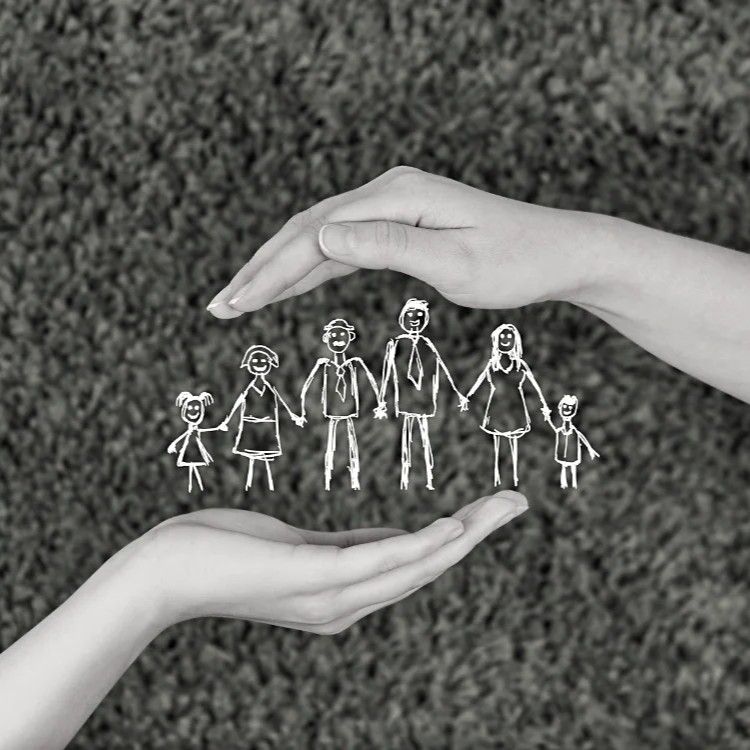
“We exist. Our children exist. Our families live their lives every day, even though the state persistently refuses to recognize them.” With these words, a panel on same-sex families in Serbia was opened on Monday, June 2, 2025, organized by the Center for Queer Studies with support from the Heinrich Böll Foundation in Belgrade and the European House in Belgrade. The discussion focused on the everyday realities of lesbian and gay parents – their struggles, experiences, questions, and the answers that the law stubbornly fails to provide.
In an atmosphere of attentive listening and mutual support, the speakers shared testimonies about the invisible labor of parenting, efforts to protect their children in a legal system that ignores them, personal breakthroughs, and institutional barriers. The panel was not only a space for exchanging experiences but also a place for the political articulation of a growing demand: that Serbia finally adopt a law on same-sex unions and recognize the legal status of “rainbow” families.
Living Without a Law: Improvisation as a Way of Life
Most speakers emphasized that parenting in same-sex unions in Serbia requires constant improvisation. The law recognizes biological parents but not the rights and responsibilities between partners and children in same-sex families. There are no forms that account for two mothers. No clear protocols in hospitals, schools, or kindergartens. “Everything we have today is the result of constant patchwork – a bit of goodwill from individuals, a bit of creativity, and a lot of stress,” said Marjana Majstorović, a lawyer and one of the legal representatives in strategic litigation cases. “There is no legal framework. Children are unprotected. Parents are unrecognized.”
While waiting for a law, everyday life must somehow go on. Aleksandra Gavrilović, education coordinator for the lesbian human rights organization Labris and one of the founders of the informal network “Rainbow Families,” spoke about how important it was to connect with other parents facing similar challenges: “The need for community grew every day. We didn’t just want legal protection – we wanted our children to meet other children living in families like theirs.”
The Language We Use to Speak About Ourselves – and Our Children
The participants particularly emphasized the problem of language: how do you refer to a parent who is neither biological nor legally recognized? What words are available, and which are yet to be invented? Jelisaveta Blagojević, philosopher and professor at the Faculty of Media and Communications, shared an experience from a hospital, where, in a concrete encounter with medical staff and other women in postpartum rooms, she felt the absence of language to express her position as a non-biological mother in a same-sex relationship. She spoke about how other women were also at a loss, unsure how to ask – and how, in that silence, “a new language was born.” In that way, “we open up a space for speech, for a language that does not yet exist, for a politics that is not institutionalized, but is real.”
Marjana Majstorović spoke to this as well: “Children often teach us words we ourselves don’t have. Once, my daughter was asked, ‘Who is Duša to you?’ and she replied, ‘My Duša is like-a-mom to me.’ That is the most accurate definition of our family I’ve ever heard.”
These moments, however beautiful, also point to a serious problem – the absence of an institutional and social language capable of expressing the diversity of family relations. “We have terms like ‘mother,’ ‘stepmother,’ ‘stepfather,’ but we don’t have a word for a partner who is an equal parent but not a biological mother,” she said. “This isn’t just a question of language – it’s a question of recognition.”
Ana Brnabić as a Symbol of Political Ambivalence
It’s impossible to talk about same-sex families in Serbia without mentioning former Prime Minister Ana Brnabić – the first openly lesbian politician to head the government and a parent herself. Yet her name in the discussion sparked frustration rather than inspiration.
“Her presence in politics did open some doors, but she never walked through them,” said Aleksandra Gavrilović. “Instead of being an ally, she became a symbol of political passivity. She lives what we’re fighting for, but has never articulated it as a shared goal.”
This disconnection between the Prime Minister’s personal life and the politics she leads further highlights the hypocrisy of those in power. While publicly invoking the symbolism of “modernity” and “tolerance,” in practice, politics remain deeply homophobic in their inaction.
Strategic Litigation: When Courts Replace Legislators
In the absence of political will, the struggle has moved to the courts. Several parents and activists are involved in strategic litigation aimed at achieving systemic change through a ruling by the European Court of Human Rights in Strasbourg. “We’re no longer asking. We’re suing,” said lawyer Marjana Majstorović, explaining the rationale behind these cases: “We’re not asking for privileges. We’re asking for equality. If the state refuses to pass a law on its own, it will be forced to under obligation from Strasbourg.”
These cases are not only about symbolic recognition, but also about everyday needs – the ability for a parent to sign a document, take sick leave to care for a child, for a child to have inheritance rights. All the things taken for granted in heterosexual families are inaccessible to same-sex ones.
Children as a Political Argument
At the heart of every story were not just adults, but children. Their legal vulnerability is what hurts many parents the most. Participants spoke about enrolling children in kindergarten without recognition of both parents, the fear of what happens if the “legal” mother gets sick, the fact that the other parent cannot attend parent-teacher meetings or pick up the child from school.
Jelisaveta Blagojević shared a touching memory: “At kindergarten, I felt like I was being treated as some kind of nanny. But then, two other moms invited me for pancakes with the kids – and for the first time, I felt that someone saw us as a family.”
Social Change Is Already Happening – Even If the Law Has Forgotten
The panel concluded with a clear message: families don’t wait for laws to exist. They already do. And their existence is an act of social and political change. “The greatest revolution is that we chose to live authentically, with or without papers. The fact that we exist in spite of is our greatest strength,” emphasized Jelisaveta Blagojević. “We take our kids to ballet, to school, to birthday parties – that changes society more than a thousand declarations,” concluded Aleksandra Gavrilović.
In the end, political power does not need to be sought only through institutions but also through existence, visibility, and testimony: every public outing with a child from a same-sex family is an act of resistance and affirmation.
While the political scene in Serbia and beyond is increasingly shaped by nationalist and conservative tendencies, the experiences of rainbow families bear witness to a quiet, everyday revolution. Although many obstacles remain – legal, institutional, symbolic – none have succeeded in stopping what has already begun: the creation of families based on love, responsibility, and mutual respect.
Recording of the panel in Serbian: YouTube
Dead Inside, But Still Horny!
An Open Discussion on Dating in the Age of Grindr, Hookup Culture, and Mental Health
Queer Studies 2026
Lecture announcements for the first semester.
Queer Studies 2026. First semester.
In the 2026 academic year, Queer Studies will once again be a two-semester course consisting of 24 lectures, held at the Institute for Philosophy and Social Theory.