The Extraordinary Fate of Iman Kelif or on Culture Wars
Dušica Popović
Sport is a platform where not only athletes but also current social and political issues are confronted directly. Moreover, sports at the highest level have the power to draw the attention of a broad, perhaps inadequately informed, audience to the uncertainties and dilemmas that culturally define our time. The recent Olympic Games certainly highlighted the widespread misunderstanding related to gender, cultural, and even national identities.
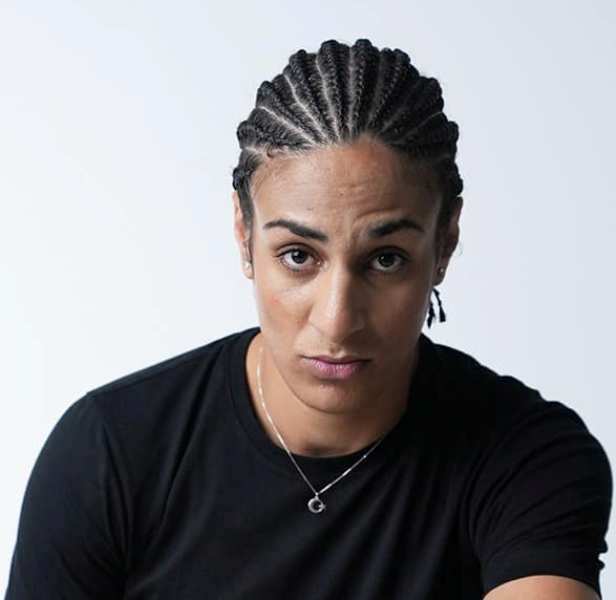
A case study is the Algerian competitor, gold medalist in boxing, Iman Kelif (Imane Khelif). She was unwillingly thrust into the center of an international scandal when, after her victory against the Italian competitor Angela Carini, it was revealed that she was a "biological male," meaning she has XY chromosomes and a high level of testosterone. The results of the test, which led to I. Kelif's disqualification last year, were published by the International Boxing Association (IBA), which was then led by Russian management, subsequently suspended due to corruption. As a result, I. Kelif became the target of widespread condemnation and attacks on social media (especially on Twitter), against which she filed a lawsuit after winning the gold medal, citing "misogyny, sexism, and racism."
In the media sphere, this sparked a debate about the accuracy of the tests, thus dividing the global public into those who believe and those who do not believe in their credibility. However, this dilemma is false, as I. Kelif's own coaches (reluctantly) admitted that "there is a certain issue with her chromosomes and hormones." Therefore, the facts are not in dispute, but, as always, the interpretations are. Additionally, a mistaken impression has been created that this debate involves two sides, while in reality, there are three: the Western right, the Western mainstream left, and the Algerian Muslim community.
The Western right and right-leaning celebrities protested against I. Kelif, condemning the left-leaning Olympic Committee for what they would call their alleged hypocrisy in allowing men, if they (clumsily) disguise themselves as women, not only to beat women but also to be rewarded for it. Western conservative media and their sympathizers, however, claim to advocate for equal opportunities for women. However, this only applies to "purebred" and "racial" women, who, in addition to having the right genes and appearance, are recognized by their perpetual search for protection—even if they are Olympic boxers(!). This group believes in the results of tests, i.e., science, to the extent that it supports their binary gender division. Thus, they (implicitly) naively believe that the division into XX and XY chromosomes proves that nature precedes culture; that biology or nature is obligatory, unlike culture; that nature is truth, while culture is the aestheticization of truth at best or a lie at worst (in this case); that there is some minimum of human nature that can be observed independently, apart from culture, etc. It is understood that such views endanger "proselytic" or trans women, for which I. Kelif is mistakenly accused.
The liberal-left Olympic Committee, on the other hand, insists on inclusion and tolerance, advocating for equal opportunities for all—those who claim to be women. The Committee no longer conducts such tests and does not believe in tests or science to the extent that they do not support their policy of gender fluidity (it should be added that the Committee seems particularly suspicious of anything that comes from or has ties to "untrustworthy" sources, read: the Russian people in this case). Thus, this group believes that it is neither politically correct nor considerate to claim that something exists (here the gender division) if it might hurt someone's feelings (those who defend I. Kelif mostly appeal to her feelings). This group holds the belief that culture precedes nature; that biology/nature is latent culture, so to speak, a cultural variety; that everything is a matter of choice or cultural preference, and what seems not to be—is not because there are too many diligent villains whose interest it is not to be so, etc.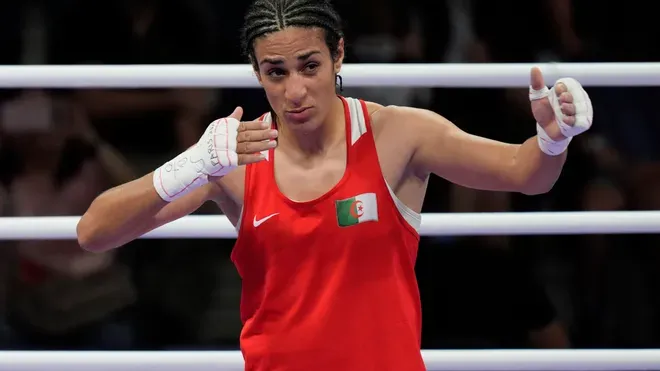
On the third side, Islamic states do not participate in these kinds of debates, considering them racist and immoral, perhaps even "perverse Western affectation." I. Kelif's compatriots are content with their belief in common sense, which dictates that external (genital) anatomy is the truth (and destiny). If the Western liberal left culturalizes nature, then the Islamic world naturalizes culture in the sense that culture, including religion, i.e., Islam, is not something arbitrary and "liberating" (as the Western left believes) or "seductive" and "deceptive" (as the Western right believes). Therefore, it is hard to believe that in Algeria, where Sharia law is present to an extent and where any gender ambiguity is legally punishable, I. Kelif chose to be a (trans) woman in order to win gold. The boxer herself stated that it would be a disgrace for her and her family. Moreover, I. Kelif does not come from a privileged family, and she fought against the prevailing prejudices in her environment that women have no place in male sports, becoming an inspiration to other women and a stimulus for the further development of women's sports in Algeria. Hence, Algerian women cannot easily accept the irony that their national heroine and icon of women's sports is, in fact, a man (to some extent).
However, despite the aforementioned conflicts, it seems that the three different sides have something in common: they all claim to fight for women's rights (accusing each other of misogyny), only they don't know or better yet can't agree on what makes women women. But perhaps the problem has been wrongly framed from the start. Namely, according to available information, Iman Kelif is actually an intersex person born with female genitalia and a male karyotype. This means that she does not fit into existing gender and sex standards. Despite this, the global internet community was eager to categorize her either among men or (trans) women, which shows that we still lack adequate analytical tools to consider in-between categories. Because no matter how much trans people on the one hand disrupt the existing value order, on the other, they paradoxically artificially maintain it in play, given that they assume there is an "inauthentic" and "alien" gender in which they were born and an "authentic," "their" gender into which they need to transition. In doing so, they involuntarily and unconsciously reflect prevailing attitudes that all elements of humanity must necessarily align, that the inner and outer must coincide, that the split between different registers of humanity is actually a "mistake of nature," etc. (which, of course, does not mean that trans people should not be supported or that their personal reasons should be challenged).
However, the category of people that fully provokes the binary gender-sex order with their innate indeterminacy and not supposedly arbitrary choice is the intersex population, which is more widespread than commonly thought. They often cannot be comfortably placed either among men or among women without being put on a crippling Procrustean bed: there is a tendency to consider such individuals as "superior" women if they are physically strong and at the same time "inferior" women due to infertility, as well as "inferior" men or even trans women/men—in the attempt(sic!). But this represents an ethical and epistemological failure since the intersex population proves that there is, and hardly can be, ONE satisfactory anatomical, genetic, cultural, psychological... criterion that can once and for all and unequivocally settle this kind of uncertainty.
When it comes to sports, perhaps a temporary solution would be to establish Olympic Games and other competitions for those in the gray zone. However, the problem is that these competitions would not immediately be international, but would probably only include North America, Western Europe, and Australia. Because other countries would have to recognize and support intersex and other competitors, which is prohibited or at least not welcomed in many countries worldwide. But these are prejudices that we still need to knock out.
We Were Supposed to Become Feminist Cyborgs. Instead, We Got ChatGPT.
It’s hard not to see contemporary AI as a strategic effort to contain and control the latitude of political possibilities, offering brainstorming companions that steer users toward familiar solutions and writing tools that reduce communication to a series of ready-made template.
University Bans Plato: “Promotes Gender Ideology and Homosexuality”
At a U.S. university, orders were issued to remove passages from Plato’s "Symposium".
Zohran Mamdani, Mayor of New York
Zohran Mamdani is one of the most recognizable young politicians of the progressive left in the contemporary American political landscape.