
The Civil Partnership Law in a Dusty Drawer
Sara Novakov
The draft Law on Civil Partnerships, which aims to legally recognize the family life unions of two adults of the same sex if registered with the competent authority, has been in the Serbian Parliament’s procedure for a month and a half but has yet to reach the agenda. The Green-Left Front (ZLF) – “Don’t Let Belgrade Drown” parliamentary group submitted this proposal to the Assembly on September 3. However, as was the case a year ago when it was not discussed, it still hasn't come before the deputies. This draft law on civil partnerships addresses issues such as the right to mutual support, property relations, inheritance, compensation in case of death or disability, rights in case of illness, rights related to pensions, healthcare, and social insurance, and the procedure for terminating a civil partnership.
This is not the first time that a law has been proposed to regulate common life situations and issues like inheritance, property, hospital visits, or taking out loans in same-sex partnerships. A similar draft was presented to the Serbian Assembly around the same time last year. ZLF representative Radomir Lazović said back then that it was long overdue to pass such a law, even though the government had promised it for years. He noted that the Ministry of Human and Minority Rights, under Minister Gordana Čomić, had prepared a similar proposal, but the government did not adopt it, using it instead “just to appease the public,” while President Aleksandar Vučić declared that he would “never sign such a law” as long as he held office.
A year later, under the new parliamentary assembly chaired by Ana Brnabić, who has openly discussed her sexual orientation, there is still no progress on a law to reduce discrimination that prevents many from exercising basic life rights.
"Practical, everyday situations that should be normal"
According to ZLF legal expert and representative Jelena Jerinić, no one has yet contacted them to discuss the proposal.
“We said last time we submitted it, and this time as well, that we are ready for broader discussions about it, to explore specific solutions. The question of why this is problematic for the majority in parliament is one for them, not us,” Jerinić told NIN in an interview.
She believes Serbia is ready for such legislation and adds that it is high time to find solutions that allow everyone to live a normal life.
“This law would resolve the problems they face in everyday life. The proposal covers various aspects of shared family life, health insurance, family relations, and inheritance. These families – and same-sex unions are families to us – exist in Serbia, but they need legal recognition to exercise rights as partners. For example, when one partner in a same-sex union falls ill, the other cannot visit them in the hospital as a spouse or common-law partner can in a heterosexual couple, or if one partner is imprisoned or in a similar situation. This also applies to inheritance, property relations, and similar issues,” our source explains. Photo: Marija Janković / VREME
As she states, these are practical, everyday situations that are assumed for heterosexual people.
“Imagine someone lives with their partner for 20, 30, 40 years in a life union, in a family. When one of these two people dies, only blood relatives can inherit, even though same-sex partners are often estranged from their biological families. It’s simply unjust that a same-sex partner cannot inherit from the person with whom they shared their life for decades. It’s neither logical nor reasonable to discriminate against people in same-sex partnerships this way. Ultimately, this is about human dignity, which is guaranteed to everyone under our Constitution. We should all consider what it would be like if things that are taken for granted for heterosexuals were denied to us,” Jerinić emphasizes.
She mentions that research conducted by non-governmental organizations a few years ago showed that a large majority of Serbian citizens, regardless of their sexual orientation, have no objections to the registration of same-sex unions and to same-sex partners exercising these rights.
“There is absolutely no logical or practical reason why such a law shouldn’t be passed. We will continue to advocate and, as representatives, to propose it if needed, again and again, until it’s passed. We ultimately invite members of all political parties to join in if necessary to reopen the debate, which was abruptly cut off without explanation,” concludes Jerinić for NIN.
"It’s degrading to be denied rights that should be inalienable"
According to writer and civic initiative activist Dragoslava Barzut, there are thousands of same-sex unions in Serbia whose relationships remain unregulated.
“Beyond the stigma that results in numerous forms of discrimination, these people, in the legal sense, cannot exercise certain family rights as other people born with a heterosexual orientation or living that way can,” Barzut told NIN, adding that these rights are very much everyday, practical issues.
“When my partner had a health issue a few years ago and felt unwell at night, we called an ambulance. When the team arrived, since she was unconscious, they asked what my relationship to her was, and I said I was her partner. However, they didn’t allow me to go with her to the hospital. I had to call her parents to have them put me on the visitation list, which is a humiliating experience since she is my primary family. It’s also common for LGBT people to be estranged from their parents. And I haven’t even mentioned inheritance rights—we have to find workarounds, writing lifelong care contracts and similar,” she explains.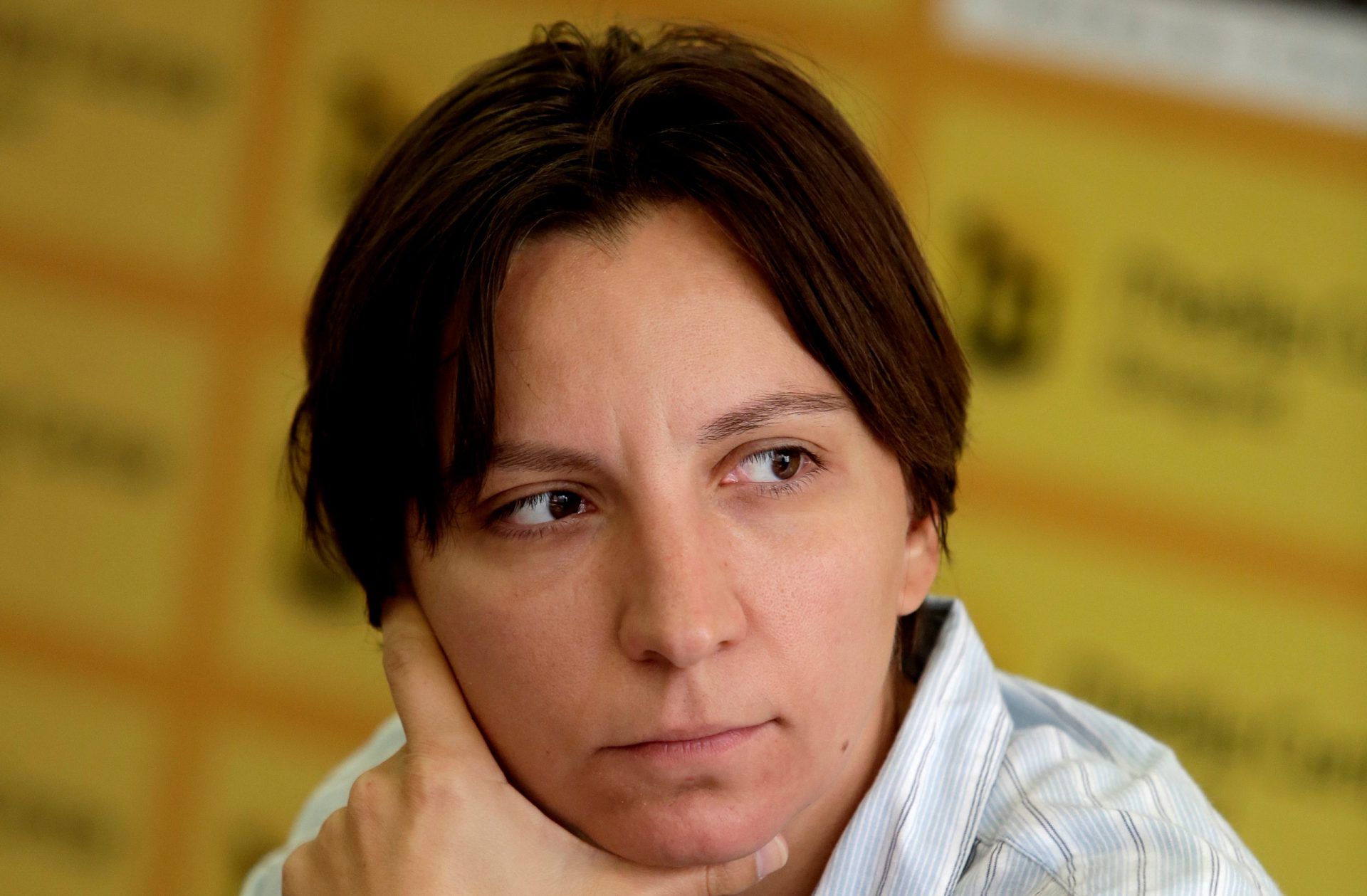
Barzut says there are no significant obstacles to the passage of this law, judging by public opinion, as the most recent survey showed that over half of respondents supported its adoption.
“I think that when you explain the purpose of this law to people, they strongly support it, so the responsibility lies with the system, or the ruling coalition. Countries in our region have similar laws, and it’s profoundly degrading not to be able to share or have rights that should be inalienable, such as family rights,” Barzut concludes.
The bill's rationale states that “by adopting this law, the National Assembly, as the house of all citizens, would signal that all citizens are free and equal in rights, without discrimination.”
The bill’s sponsors reference examples from European and non-European countries’ legal frameworks, international conventions, and rulings from both domestic and international courts, including the European Court of Human Rights. The rationale also notes that legally recognized same-sex partnerships are already established in nearby countries such as Slovenia, Croatia, Montenegro, Hungary, and Greece.
Source: NIN Weekly, October 22, 2024.
We Were Supposed to Become Feminist Cyborgs. Instead, We Got ChatGPT.
It’s hard not to see contemporary AI as a strategic effort to contain and control the latitude of political possibilities, offering brainstorming companions that steer users toward familiar solutions and writing tools that reduce communication to a series of ready-made template.
University Bans Plato: “Promotes Gender Ideology and Homosexuality”
At a U.S. university, orders were issued to remove passages from Plato’s "Symposium".
Zohran Mamdani, Mayor of New York
Zohran Mamdani is one of the most recognizable young politicians of the progressive left in the contemporary American political landscape.