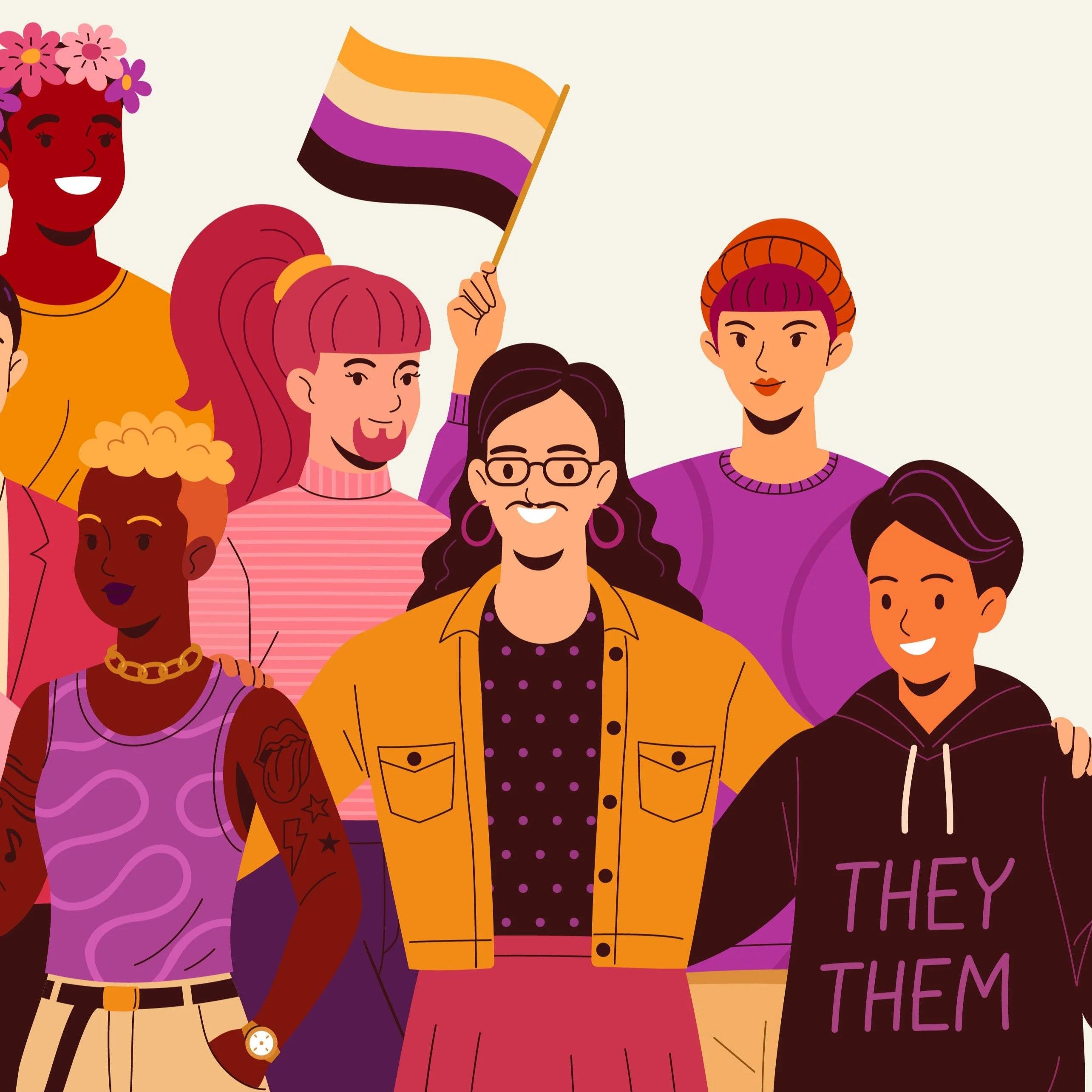
Live and Let Others Be Who They Want to Be
Jasmina Pašić
"Let's talk," invites activist Kristian Ranđelović, an openly intersex person in Serbia, born with characteristics of both sexes. Valerijan Savić, a medical student, was born a boy but does not identify with any gender as a non-binary person. What identities does the queer community encompass?
Do we understand Milana Nikolić, the first openly gay journalist and activist, more than someone who is asexual, pansexual, or transgender? I ask my daughter, a teenager, what young people think about this.
"You're being annoying because of the article. Of course, it's easier to be gay because people know what gay is. For others, everyone says they're gay but has no idea who these people are." We tend to judge without understanding. Something unclear?
Let's start from the beginning...
First, the Irish and Swiss representatives at the Eurovision Song Contest confronted us with the fact that non-binary people cannot and do not want to identify solely as men or women. This was followed by a barrage of insults, threats, and ridicule on social media, mostly targeting their identities rather than their songs.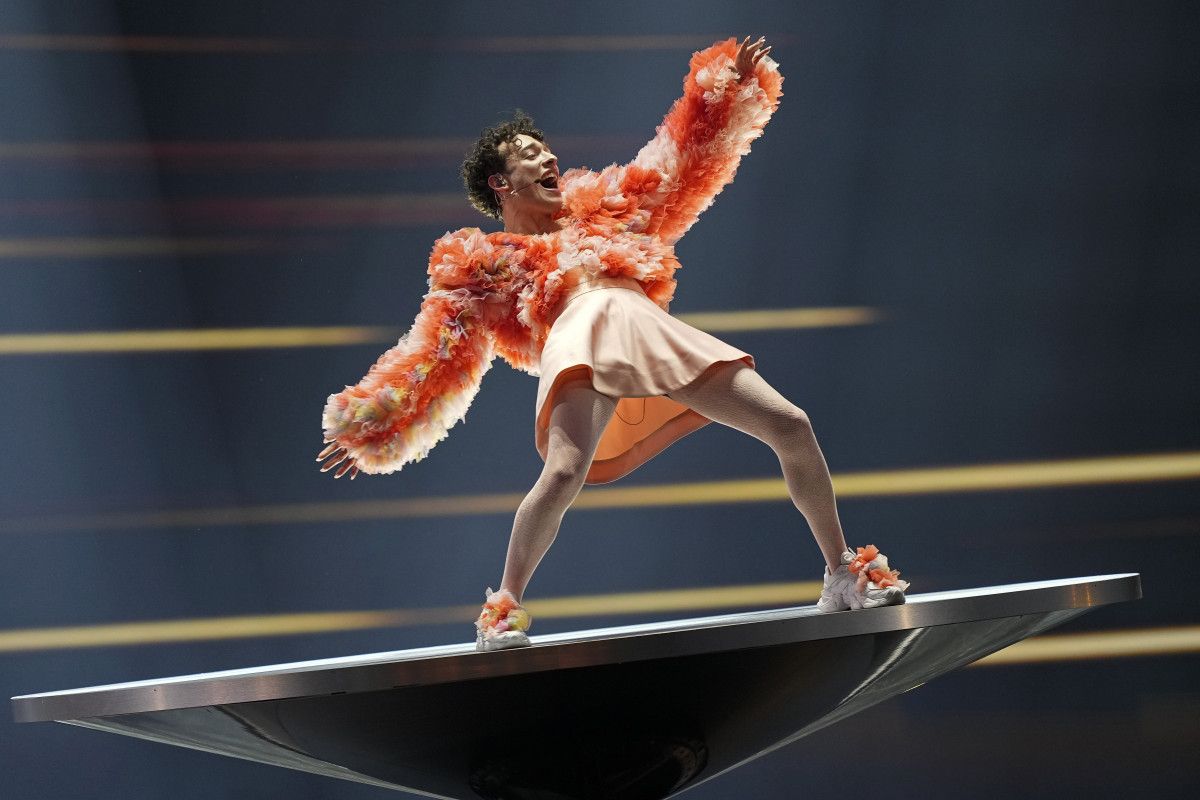
Then, after Eurovision, on May 17, we marked the International Day Against Homophobia, Biphobia, and Transphobia, among other things, waiting for justice for Andrej Obradović. He is an LGBT youth who claims to be a victim of police torture—read: beatings and insults during a home search. Since mid-February, there has been no news about the complaint against the police officers or the investigation's progress. Simultaneously, we await the verdict in the trial that began a month ago for the murder of 18-year-old transgender girl Noa Milivojev, who was dismembered and packed in garbage bags last summer in Belgrade.
Gender and Sexual Identity
They are all LGBT+ or LGBTQ+. There are even longer acronyms, such as LGBTIQA+, which some criticize as "alphabet soup." Lesbians, gays, and bisexuals are more familiar to the general public due to their sexual orientation. But there are also transgender and intersex people, non-binary, asexual, pansexual... or simply queer—those who choose not to fit into any of the mentioned categories. Conservative Serbia has barely learned, even with a gay prime minister leading the government, that same-sex attraction is not a disease. Now, there are also people between gender identities—they have two or more genders, have no gender, or are between genders. And gender identity does not have to align with sex. Because sex and gender are not the same.
"Conchita Wurst's victory at Eurovision helped people in Serbia who feel the same with a message of encouragement," says Milan Nikolić, the first openly gay TV host, but adds that we live in an increasingly rigid society:
"This victory has excited the worst among us. I'm not just talking about the political right and the Serbian Orthodox Church but hordes of pseudo-journalists sitting in TV studios, reducing non-binariness to nonsensical statements like, 'what if I feel like a cat, dragon, or ceramic vase tomorrow?' And all this on national frequencies, of course. In a society of public figures who don't put in even the minimum effort to understand non-binariness but know it's a terrible hoax of the new world order, evil from the West, a plague, a threat, a disease."
If we don't understand something, the simplest thing is to let the person define their experiences and tell their own story. Even if we don't always know how to professionally or politically correctly describe their identity or how to address them.
A non-binary person from Belgrade, medical student Valerijan Savić, says they use all pronouns—he, she, or they—when referring to themselves:
"I think it's best for someone to simply ask if they don't know how to address a non-binary person."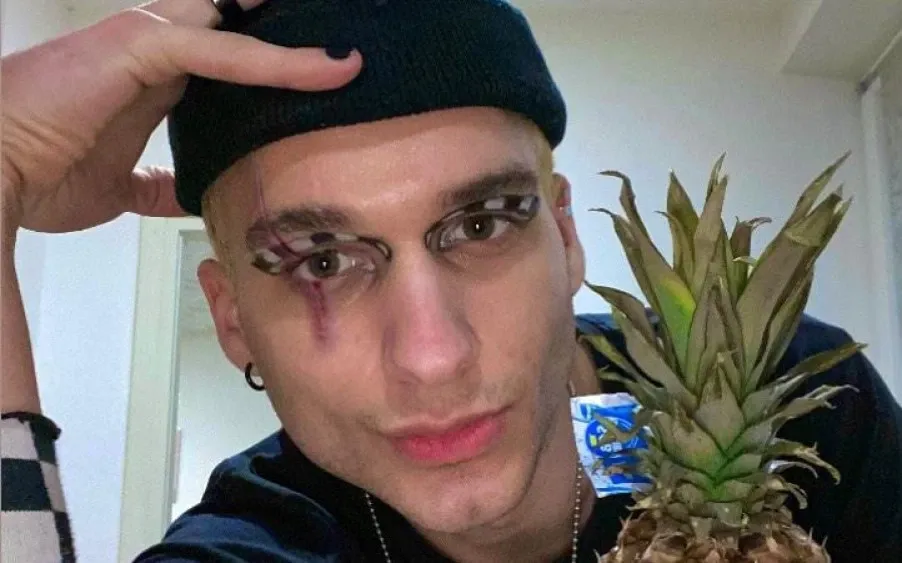
"As a society, we struggle to accept the fact that someone is different"
They emphasize that from early childhood, they had an atypical expression of themselves, but until the age of six, the environment didn't care much. Later, they were increasingly directed to look and behave like a boy.
"I came out between 2021 and 2022 when I experienced self-awareness. I am grateful to the people around me who had the patience to give me love and support to accept and love myself and unlearn many things. I never behaved like a typical boy, and through therapy, I managed to realize myself and my full mental capacity, so I would like to pursue that in the future," they say, changing pronouns on the go.
Dr. Vojin Kuzmanović, a neuropsychiatrist, explains that non-binary people can seek the help of a therapist in the process of self-awareness. "It's an introspective process, recognizing oneself as an uncharacteristic position until now. It's not a moment; this introspection lasts and wears one down. And it's normal if you need to seek a therapist to explain that you are a completely normal being with a different perception of yourself from what we see or expect from the outside."
Kristian Ranđelović, an intersex person, says that even Native Americans knew the concept of non-binariness, the so-called two-spirited person, but this is mostly unknown.
"As a society, we struggle to accept that someone is different—not only in gender and sex. Sometimes we have problems with national identities, but that's another story. And this reflects much more on LGBT+ people," emphasizes Kristian, who was born with characteristics of both sexes. His parents, on the advice of doctors, decided to leave him with female genitalia. He often emphasizes that he still doesn't know exactly what kind of operation it was. He looked like a girl, but in puberty, he realized he felt like a man. He aligned his inner identity and physical appearance after the operation. Now he is an activist, leading the organization "XY Spectrum," a psychodrama trainer, and a TV and film editor. Despite activism and public appearances, he feels that people don't actually know who he is and who intersex people are.
"No, no, they mostly don't accept it because they don't have information about it. It's a group of people that has been invisible but exists for decades, if not centuries, biologically determined by differences—genital, chromosomal, and hormonal. We see from internet comments that people don't believe someone can be born that way. They write—it doesn't exist, you're lying, it's not God-given. People can't accept the fact that it is a phenomenon, but I don't like to categorize intersex variations as a phenomenon because they are not so rare."
Understanding Differences
Ranđelović explains that intersex people are neither trans nor non-binary.
"Not everyone can or needs to connect with their biological sex. It's not mandatory. And not because someone wants or doesn't want to. For example, trans people have stress and problems with that. And we have non-binary people who transcend that category because their mental set isn't set up that way at all. Non-binary people aren't indecisive; they function in the male-female spectrum. And we have intersex people who aren't in either category—let's add the physical part, not everyone has developed genitals, not everyone has genitals of both sexes, etc. We need to understand that there are differences."
Is it then simpler to live in this country if you are "just gay" than if you are, for example, intersex or non-binary, or maybe asexual or pansexual...
Psychiatrist Vojin Kuzmanović believes this is a new moment for everyone here.
"We don't even have an adequate word in our vocabulary that wouldn't be awkward when addressing non-binary people. We can't call them 'this or that,' it's much simpler in English (they/them)."
We are far from thinking about grammatical forms that will include non-binary people when there is resistance in Serbia to accepting gender-sensitive language—to have women poets or bakers—even though we have a law on that.
"People don't understand much either. If you go out and survey 'what do you think about non-binary people'—most would look at you thinking you're joking. And not uneducated people, I'm talking about average-educated people academically," emphasizes Dr. Kuzmanović.
"They would understand if given the chance to understand. Those who want to explain are drowned out by unruly boors occupying media space and wreaking havoc on the internet. Any kind of education is an enemy to the myth of heavenly Serbia, which is falling apart from itself, poor, ignorant, and full of anger," says Milan Nikolić, journalist and activist.
He is gay, the first TV personality to come out, professionally successful, loved and supported by family and friends. Everything is seemingly okay. But he has decided to live in his "bubble," where he says he would live even if he were heterosexual.
"I live in a carefully designed bubble made up of books, series platforms, a pet, a neighborhood café, a park, and a circle of dog walkers. I live in a good part of town and work in a good environment. All other contacts are minimized not because I am LGBT but because resistance to reforming and modernizing this society takes a toll. Outside, there's only banality, sheer crudity, frustration, and unfulfillment, hissing through teeth and barking. The few people I meet are limited to six or seven streets in Dorćol. It's my choice, conscious closing, and voluntary isolation. And discrimination is implied because if I brought someone into that bubble and the wider circle of society perceived us as a couple, we would face some rude reactions."
Nikolić says there have always been, and always will be, people who aren't part of the mainstream.
"LGBTIQ people are the toughest opponents of mainstream in every sense because they feel the terror of the majority on their skin, but they also deconstruct it. There's no bigger deviation from the majority than openly queer people. Therefore, the society we live in treats them as a threat that needs to be destroyed or assimilated."
Jasmina Pašić, May 22, 2024, taken from NIN.rs
We Were Supposed to Become Feminist Cyborgs. Instead, We Got ChatGPT.
It’s hard not to see contemporary AI as a strategic effort to contain and control the latitude of political possibilities, offering brainstorming companions that steer users toward familiar solutions and writing tools that reduce communication to a series of ready-made template.
University Bans Plato: “Promotes Gender Ideology and Homosexuality”
At a U.S. university, orders were issued to remove passages from Plato’s "Symposium".
Zohran Mamdani, Mayor of New York
Zohran Mamdani is one of the most recognizable young politicians of the progressive left in the contemporary American political landscape.