
Tjaša Črnigoj: On The History of Sex Education
Borka Golubović-Trebješanin
Voices from the region at the 58th Bitef Festival will be marked by lecture-performances. They will bravely challenge everything we’ve learned regarding sex education, gender perspectives, identity markers, and our relationship with nature. One of the three lecture-performances, which form a special unit within the main program of the 58th Bitef, is "Sex Education II: The Fight" by the young Slovenian director Tjaša Črnigoj, co-produced by Nova Pošta (Slovensko Mladinsko Gledališče, Maska Ljubljana) and Mesto Žensk.
This lecture-performance by Politika’s interviewee Tjaša Črnigoj deals with the struggle for reproductive rights in post-war Yugoslavia...
About what inspired her for this performance, she says:
– "Sex Education II" is a series of lecture-performances dedicated to the right to sexual pleasure as a basic sexual right within human rights. All topics are always approached in a documentary manner, based on conversations with women who shared their personal stories, interviews with experts from various fields, and archival materials. The performances differ from one another because each topic is treated through different performance languages, from performance art and theatrical objects to experimenting with installation or exhibition forms. From the very beginning, I imagined that one of the lecture-performances would shed light on the history of sex education in Yugoslavia, focusing on how women, their bodies, and their pleasure were treated. While researching and thinking about how to approach this topic, we came across the story, which seemed extremely charming, of Vida Tomšič, a significant Yugoslav politician, and Franc Novak, an important Yugoslav gynecologist. They were a married couple, and each fought for women's rights in their respective fields."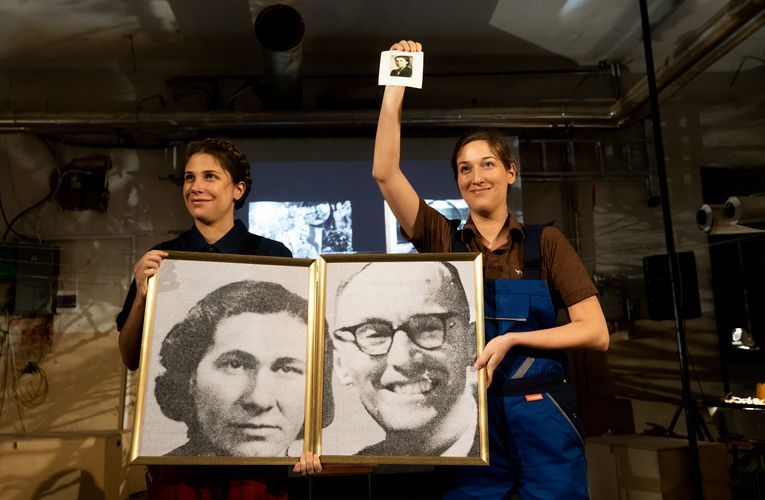
Our interviewee reminds us that after World War II, abortion was illegal in Yugoslavia, contraception for women was not available, and condoms were not commonly used. In cases of unwanted pregnancies, women resorted to unsafe abortions, which led to many deaths or serious health complications. It was an epidemic of illegal abortions. Franc Novak advocated for Yugoslavia to start promoting and producing domestic contraception for women. He introduced safe abortion methods in Yugoslavia and wrote in manuals on sexuality about the importance of female pleasure in sexual relations. Additionally, Vida Tomšič also advocated for greater access to contraception and more humane relationships between the sexes. She was one of the main proponents of sex education, which Yugoslavia introduced at a systemic level. She collaborated with the United Nations and significantly contributed to the inclusion of the right to free decision-making about childbirth in the 1974 Yugoslav Constitution. "The Fight" attempts to reconstruct their biographies and is based on archival materials and sound recordings of conversations with their daughter, Živa Novak.
Your lecture-performance deals with the struggle for reproductive rights in post-war Yugoslavia, and this work is the last of several parts of a larger whole. Can any particular part be singled out? Why is it important? What kind of artistic experience has this been for you?
I believe all five parts are important, but if I had to highlight another part besides "The Fight," it might be "Capability," which focuses on the sexual lives of women with disabilities. The central part of "Capability" is based on interviews with four women with disabilities. In the lecture-performance, audio recordings of their voices can be heard. From the beginning, it was important for us that the audience not only hear them but also see and imagine their bodies in different situations. Some of the women interviewed wanted to remain anonymous, so we experimented with different ways of presenting them on stage without revealing their identities. We decided on storytelling through drawings and illustrations projected onto the wall using an overhead and slide projector. The illustrations, created by Tijana Todorović (who is also the costume and set designer), allowed us to show images of bodies that could represent those women on stage. These bodies are shown in various situations, including moments when they are naked, making love, and experiencing pleasure. We felt it was important to portray the interviewed women as sexual beings because, during our conversations with them and with experts, it was often emphasized that society mostly sees women with disabilities as powerless and rarely perceives them as sexual beings.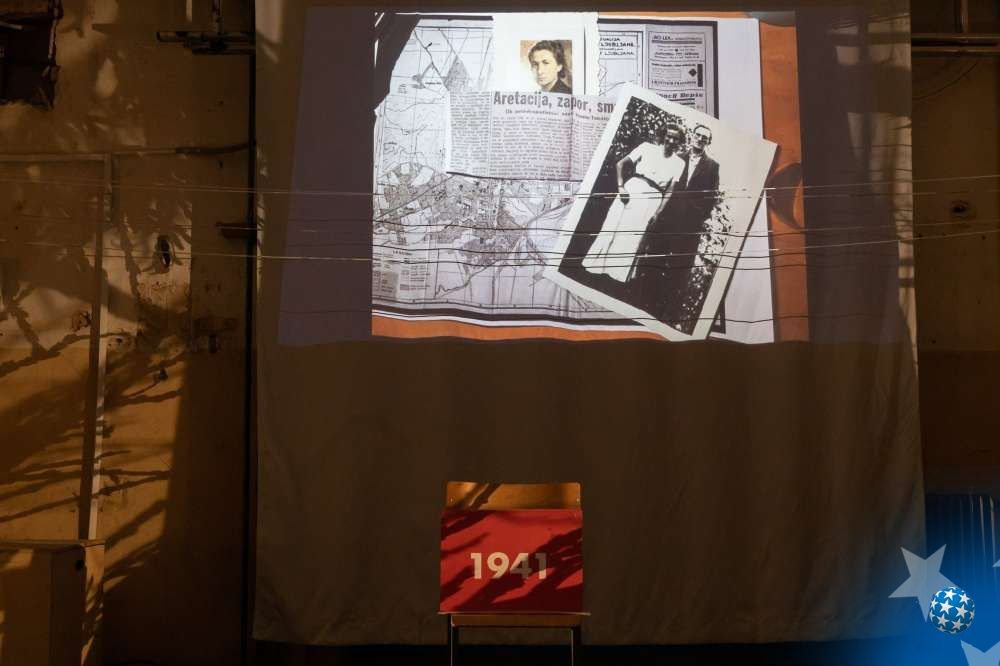
The slogan of this year’s 58th Bitef is "Beauty (Won't) Save the World." How does this fit into your artistic vision?
I don't view art, particularly theater, as something that would save the world, but I believe it can and must change it. Every time we work in theater or art in general, we take a stance on the socio-political reality around us. I believe that as a director, it is necessary for me to intervene in the reality that surrounds me through my work. That, for me, is the essence of theater. Above all, I see it as a space where it’s possible to give visibility to stories that are otherwise neglected in society. That perspective on theater is endlessly exciting to me because I believe that by illuminating certain perspectives, theater can reshape the present, rewrite history, and influence the future. I'm primarily interested in the activist potential of theater, but I must emphasize that for me, this potential is by no means separate from the artistic or aesthetic dimension of theater. As an author, what excites me most is when artistic approaches and strategies organically arise from the socially engaged position of a piece or its creators.
The Slovenian Society of Theater Critics and Theatrologists named this performance the best of 2023. How important is this recognition to you?
This recognition means a lot to us, and it's particularly valuable because it confirms that our use of documentary and feminist practices during creation is relevant at the highest artistic level.
Published on Politika.rs, September 27, 2024.
About the author:
Tjaša Črnigoj is a theatre director (AGRFT) and a philosopher and literary comparativist (UL Faculty of Arts). She is currently in training as a psychodrama psychotherapist (Slovenian Society for Psychodrama). As a theatre director and author she works both on the institutional and independent scene. In recent years, she has directed “Gilgalovanje” (Glej Theatre, 2018), “Satirikonijada” (Moment and AGRFT, 2018), “Smrčuljčica” (SNG Nova Gorica, 2018),” Plesni stroj BUM BAM” (Slovene Youth Theatre and Kino Šiška, 2019), “Bakice” (Savez udruga Molekula, Kolektiv Igralke, KUD Transformator, 2020), and the “WoW Awards” (City of Women, 2021). “Gilgalovanje” was included in the competition programme of the Borštnikovo srečanje festival, “Bakice” was performed at the Young Lions and were invited to Theatertreffen’s Stückemarkt festival in Berlin. In recent years, she has also worked as a dramaturg and as an assistant director and dramaturg or co-dramaturg with director Tomi Janežič (“Seven Questions about Happiness”, LGL 2020; Beyond Human Power, National Theatre Oslo, 2021). She was in residence at the Cité Internationale des Arts in Paris as a laureate of the French Institute, for which she also received a scholarship from the Jernej Šugman Fund, and where she completed her residency project, the transdisciplinary laboratory “Through the Eyes of the Others”. She uses a creative approach known as devised theatre, lately she has been focusing particularly on documentary theatre.
Dina Bajrektarević: On Conversion Practices
The first study on conversion practices in Serbia shows that they are most often carried out within families, educational institutions, and informal communities, frequently under the guise of care, counseling, or assistance.
Miloš Lolić: There Will Be a Bitef, but a Guerrilla One
If we find a suitable venue, this will almost certainly happen, and with that the vision my team and I have long hoped for will be fully realized—a free, libertarian Bitef.
Klara Vlasakova: The End of the World, the End of Imagination
One of the many fine events prepared by the Czech Center in Belgrade was the visit of Klara Vlasakova, a young Czech writer, playwright, publicist, and author of film scripts, as well as radio plays and comics.