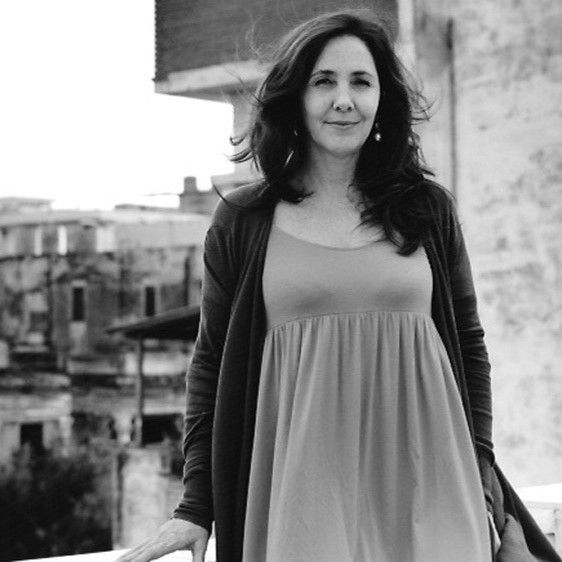
Mariela Castro: On Cuba’s Family Code
Igor Maksimović
After the referendum held on September 25th, where Cuba's new Family Code, which legalizes same-sex marriages, was approved, President Miguel Díaz-Canel declared, "Justice has been served... From today, we will be a better nation."
With this, Cuba became the 34th country in the world to legally recognize same-sex marriages. However, this socialist country, exhausted by decades of embargoes and sanctions, went several steps further, redefining not only marriage but also the family and social relationships in society, emphasizing "love, affection, care, sensitivity, and respect" and guaranteeing the right of all people to form a legally protected family.
All of this was achieved through the tireless work of the National Center for Sexual Education (CENESEX), led by Mariela Castro, the daughter of former President and First Secretary of the Communist Party of Cuba, Raúl Castro, and the renowned Cuban revolutionary and feminist, Vilma Espín.
Can it be said that you are Cuba’s Alexandra Kollontai, given that you have tirelessly worked to transform Cuban society from patriarchal to modern socialist in a relatively short time? What is the secret to your success, and which ideas have inspired you?
In my work, there is a synthesis of teachings, stories, and lessons from many experiences, ideas, and reflections on issues of emancipation. It also synthesizes the continuity of the Cuban emancipatory process.
Thus, ideas, culture, and consciousness transform through history by articulating many efforts, leaderships in a broader sense, which relate to sovereignty, the country's independence, and the processes of colonization and decolonization.
The work I lead at CENESEX, what I have promoted and tried to articulate from within Cuban society’s networks, and through the political system, is connected to the Communist Party, mass organizations, scientific institutions, the Academy of Sciences, various government decision-making forums, and my roles within the legislative branch, which I have used to bring forth the elements we’ve articulated through our work.
Therefore, my work includes the synthesis of the teachings of Alexandra Kollontai, as well as Marx, Lenin, John Stuart Mill, Simone de Beauvoir, and all the women and men who contributed to the ideas of cultural change from a vision based on justice and social equality.
That is what I feel is synthesized in my professional learning and my activism, both socially and politically. This work aims to translate scientific knowledge on the phenomena of discrimination based on sexual orientation, gender identity, and gender itself into political and communicative language that enables decision-making. This ensures that all people’s rights are encompassed by political decisions without discrimination, and I believe we’ve achieved this through articulated and collective work because one person with a good idea cannot change society.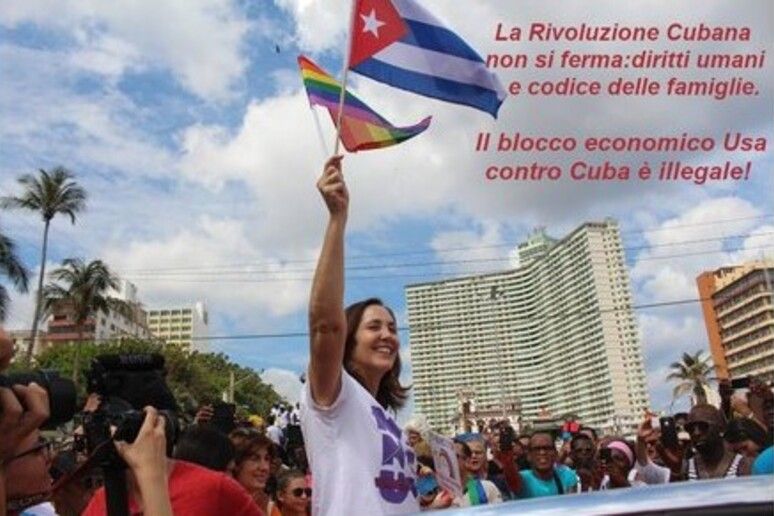
The Family Code, which is largely a result of your work, was adopted in a referendum with 67% of the vote and is considered the most progressive in the world. How difficult was it to free people from traditional beliefs about marriage, family, and love, which were deeply rooted in their consciousness under the influence of Cuban colonizers and the Catholic Church?
Well, cultural changes are very deep and complex, full of obstacles and resistance, so they cannot be made by one isolated voice. Cultural and consciousness changes, changes in subjectivities—it’s not just about changing the culture, but also how people individually interpret those symbolic elements. Therefore, it takes time and requires work, understanding through dialogue with the people we work with, with groups and different social actors. Strategies and ideas are built through dialogue, and we’ve worked on educational strategies for a long time.
Look, since 1972, the Federation of Cuban Women created a multidisciplinary and intersectoral working group to develop sexual education policy called the National Sexual Education Program. Since then, a lot of work has been done to raise awareness and spread knowledge based on scientific contributions to these issues. It took many years of effort. The institution that continued this task, launched by the Federation of Cuban Women, is the National Center for Sexual Education, which became part of the Ministry of Public Health, now known as CENESEX.
Since then, we’ve developed various initiatives we call scientific dialogue and social activism, where we carry out different kinds of activities throughout the year: academic exchanges, scientific exchanges, exchanges of experiences between the CENESEX community networks and the activism of other institutions. We exchange the same things in the same space: academics and activists who aren’t university-educated but have been trained by our institution to have the tools to participate in society.
We’ve worked to provide the elements for political will to raise awareness among the population. Even laws like the Family Code were passed as a result of this dialogue, which led to political will. This also came from scientific research, comparative legal studies, and analyses of our context and others. Then, those rights were protected in the Constitution with articles related to non-discrimination.
It was also possible to guarantee their development in the Family Law and other laws that were approved and updated, but if there is no work on raising public awareness, continuous communication efforts, people continue to act outside the law, they continue to act based on their ideas from the past, with their prejudices, and if that doesn't change, rights are not guaranteed. So, it has to go hand in hand: working to ensure there is political will, working to develop knowledge and socialize scientific knowledge, work that reflects in laws and public policies, but at the same time, if we hadn't done all the educational work over these years, we wouldn't have arrived at that Constitution or that law.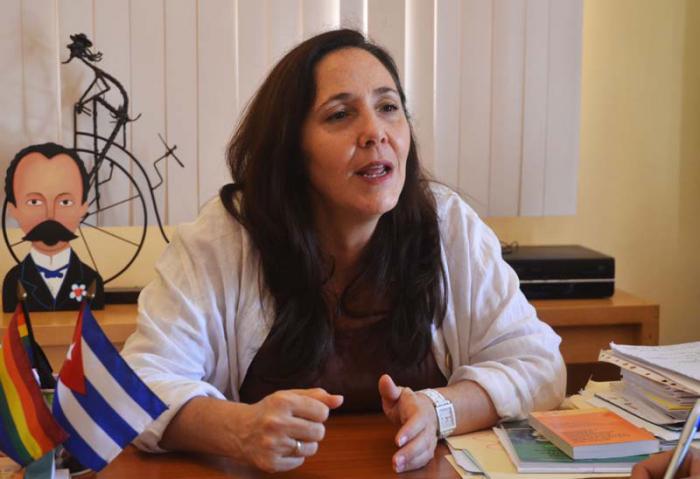
In a 2012 interview, Fidel said that if Cuba doesn’t change its patriarchal and homophobic culture, it cannot progress as a society, as it seeks to do so through socialism’s power of emancipation. Do you think this task has been fulfilled, or is there still much work to do in this area?
I believe we have fulfilled part of our goals and intentions. The best indicator that I always mention, which tells us how much has been achieved in cultural changes in Cuban society regarding these issues, is the comparison between the Family Law of 1975, which was approved after wide popular consultations in different areas of Cuban society, and the modifications made in Cuban society through the referendum on the Family Law in 2022, which was approved and ratified by the Assembly. The Family Code of '75 and the referendum on the Constitution of '76 helped establish the values of the political will of the revolutionary government. Even so, there has been much more progress on issues of equal rights between women and men. Current statistical figures show that all this work has led to women's presence in decision-making and in all the most important areas of Cuban society becoming a truly tremendous force. However, there are still prejudices to confront, ignorance to resolve, and a lot of work to be done; achieving laws is not enough, and that is the work we are now developing.
You are particularly respected by the LGBT population both in Cuba and around the world. Are you proud that, despite being burdened by sanctions, Cuba has become the 34th country to legalize same-sex marriages and allow same-sex couples to adopt children, something even more developed countries have yet to achieve?
I am proud of Cuba for many achievements, but especially those in which I have participated more directly. It makes me happy, despite the many challenges and desires we have yet to achieve, but I am happy about the ability of the Cuban people to transform themselves in their own revolutionary process. That is what makes me proud of this capacity, this quality of the Cuban people to continue to transform in the revolutionary process, to keep contributing, to keep questioning, suggesting, and deciding.
Have there already been changes in the implementation of the provisions of the Family Code in Cuba? Are you satisfied with its reception by the Cuban people, and how much are Cubans already using the rights of the current law?
Let’s see—no, I’m not satisfied. First of all, 33% of the population voted against it, which isn’t a small number. It means we still have a lot of work to do to educate people who are turning away from it or not receiving our message. We need to work more on the sexual education program in schools, our communication efforts, and train professionals and political and administrative cadres to embrace the ideological meaning of these educational efforts for emancipation.
We’re ensuring the capacity for people’s self-determination based on knowledge. Not everyone assimilates it that way, though; some see it as just a slogan, a phrase, or an idea. We defend the idea that all spaces are for all people, just as we’ve defended that all rights are for all people and all kinds of families. There are those who say, 'No, I'm not a chauvinist, because I help my wife at home.' But it's not about helping, it's about equally sharing responsibility for the household. Let me give an example: I don't have prejudices against homosexuals, but as long as my daughter or son isn't homosexual, or that they walk separately on one side while I'm on the other.
Then there is a tendency that arises in many countries to create ghettos, closed circles, so that they do not contaminate one another. What we defend is precisely not to separate, not to divide, not to segment, not to create spaces for one group or another because we believe that all spaces are for all people. Just as we have defended that all rights are for all people and all types of families. So, this is the area in which we work, and we strive not to be influenced by those trendy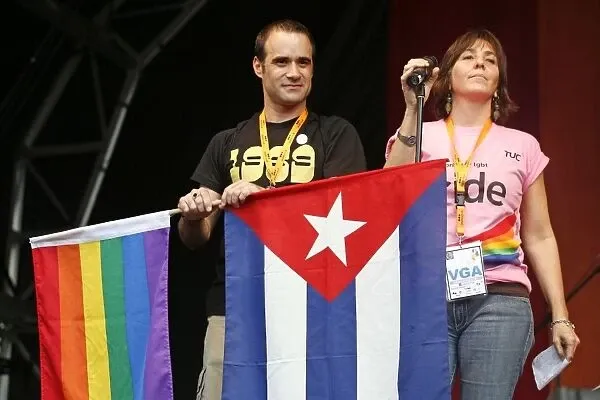
Do women in Cuba step out of the private sphere into public spaces, and how far have they progressed in their further emancipation? How much are women represented in Cuban political life?
According to statistics, more than 55% of parliamentarians are women, which has placed us second in the world for several years. This number increased in the recent elections, with the presence of women rising. Women are also the majority in the academic world: academics, university professors—most of us are women in healthcare, education, and law. Even in the most advanced research on vaccine biotechnology, the majority of those involved in these unprecedented scientific achievements—Cuba's five vaccines against COVID—are women, and now with this new vaccine offering multiple protections.
There are more female university rectors, more female ministers and deputy ministers—in short, there is a significant presence of women in Cuban political and administrative life. The issue we are addressing and making visible is that women bear a greater burden than men. It is women who are present in situations requiring care, tending to family needs; they are the ones who stop working to care for children, the elderly, or the sick. This shows that the sexual division of labor is still in effect. In this family life situation, women, who are in full productive capacity and professional development, must stop contributing to society to fulfill these roles. As a result, there is currently a significant political debate in Cuban society about how we will resolve this issue.
We, as women, have guaranteed sexual and reproductive rights. We have the right to abortion, the right to many things that may sound like science fiction elsewhere. Then we have maternity and paternity leave, which can also be extended to grandparents, allowing them to take on childcare duties if parents are unable to enroll children in educational institutions. There is a body of laws and measures in place, and work is being done on their implementation.
We conduct educational and communication activities so that people understand what their rights are, claim them, and effectively exercise those rights. Otherwise, everything will remain beautiful words on paper, filed away, never to be realized. Often, people come to us, for example, seeking help from the ombudsman's office, because prejudices continue to affect their family or professional lives.
The Family Code was created with input and feedback from 6.5 million people, about 75% of the Cuban electorate, with 20 drafts prepared over 80,000 meetings in local communities. Is this model of participatory democracy the path Cuba will continue to follow?
Well, yes. Cuba, or rather the Cuban revolutionary process, has been characterized by developing policies that build participatory consensus. It is important for the population to participate, and one of the things we aim to do with our work is to contribute ideas and raise questions that provide analytical elements that facilitate the improvement of these democratic participation processes. From the earliest phases of the revolutionary process, we have worked with the participation of the people, designing policies with the people's input. That is the path we are on, one of perfecting these processes, creating mechanisms for the functioning of socialist society, despite the hostile behavior of imperialism, which hinders it. That is important to say.
Published on Republika.rs, August 31, 2024.
Dina Bajrektarević: On Conversion Practices
The first study on conversion practices in Serbia shows that they are most often carried out within families, educational institutions, and informal communities, frequently under the guise of care, counseling, or assistance.
Miloš Lolić: There Will Be a Bitef, but a Guerrilla One
If we find a suitable venue, this will almost certainly happen, and with that the vision my team and I have long hoped for will be fully realized—a free, libertarian Bitef.
Klara Vlasakova: The End of the World, the End of Imagination
One of the many fine events prepared by the Czech Center in Belgrade was the visit of Klara Vlasakova, a young Czech writer, playwright, publicist, and author of film scripts, as well as radio plays and comics.